 | And Biodiversity
Quotes
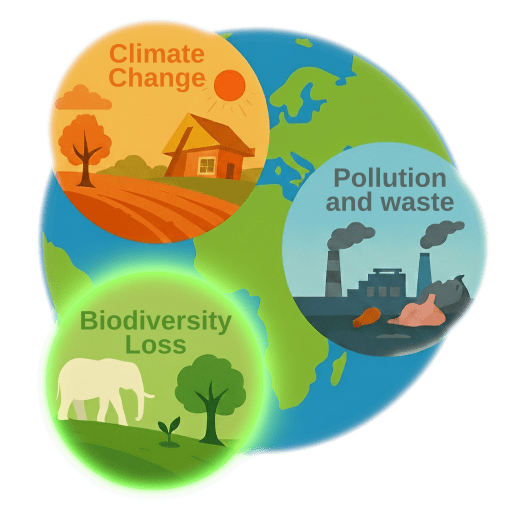
Read, cite, and share quotes from major reports regarding biodiversity loss.


📰 Headlines
IPBES: Business and Biodiversity Assessment (2026)
- Businesses Can Either Lead Transformative Change or Risk Extinction
- All Businesses Depend on and Impact Nature
- Corporate Ignorance Threatens Nature’s Uncounted Value
- Unpriced Biodiversity Loss Endangers Global Financial Stability
- Isolated Corporate Data Silos Mute True Impact
- Binding Mandates Must Force Capital Alignment with Nature
- Businesses Can Either Lead Transformative Change or Risk Extinction
UNEP: State of Finance for Nature 2026
- Nature-Destructive Finance Tops US$7 Trillion
- Global Finance Is Bankrolling Nature’s Destruction
- Economic and Financial Stability Depend on Reversing Nature Loss
- Business-As-Usual Threatens Ecosystems, Economies and Human Well-Being
- World Must Turn the Wheel on Nature Finance
- Investment in Nature Outpaced More Than 30 to 1
- Global Economy Erodes the Nature It Depends On
- A ‘Big Nature Turnaround’ Is Within Reach
- Nature-Destructive Finance Tops US$7 Trillion
IPBES: Nexus Assessment (2025)

- Interconnected ‘Nexus’ Crises Threaten Global Food, Water, and Health Security
- Siloed Environmental Policies Failing as Climate and Biodiversity Crises Compound
- Trillions Needed Annually as Funding Gaps Jeopardize Global Sustainability Goals
- ‘Low-Cost’ Synergistic Solutions Available Right Now to Protect Nature and Health
- Cross-Sector Blind Spots Deepen Socio-Economic Inequalities
- Integrative Governance Urgently Needed to Replace Fragmented Decision-Making
- Interconnected ‘Nexus’ Crises Threaten Global Food, Water, and Health Security
OECD: Environmental Outlook on the Triple Planetary Crisis (2025)
- Siloed National Strategies Miss Vital Synergies
- Uncoordinated Energy Transition Risks Localized Ecosystem Destruction
- Accelerating Climate Change Threatens to Become Primary Driver of Biodiversity Loss
- Holistic Government Policies Essential to Tackle Intersecting Crises
- Siloed National Strategies Miss Vital Synergies
UNEP: Global Environment Outlook 7 (GEO-7) (2025)
- Closing Window for Action as Compounding Planetary Crises Reach Irreversible Tipping Points
- Long-Term Benefits of System-Wide Transformation Far Outweigh Costs of Inaction
- Resource-Intensive Pathways Doom International Environment Targets
- Linear Growth Models Accelerate Severe Ecosystem Collapse
- Systemic Planetary Crisis Demands Whole-of-Government Mandates
- Shifting Production Models Yields Multi-Trillion-Dollar Economic Dividends
- Indigenous Knowledge and ‘Two-Eyed Seeing’ Essential to Driving Sustainable Futures
- Closing Window for Action as Compounding Planetary Crises Reach Irreversible Tipping Points
IPBES: Transformative Change Assessment (2024)

- Superficial Policy Tweaks Fail to Halt Biodiversity Collapse
- Prolonged Political Inertia Compounds Inaction Costs
- Heavy-Footprint Sectors Require Urgent Structural Overhauls
- Empowering Indigenous Defenders Overcomes Vested Interest Resistance
- Superficial Policy Tweaks Fail to Halt Biodiversity Collapse
World Wildlife Fund: Living Planet Report (2024)

- Wildlife Populations Plunge 73% in Half a Century
- Perverse Subsidies Fuel Destruction 35 Times Faster Than Conservation
- Eroded Food Systems Threaten Global Nutritional Security
- Humanity Faces Narrow Five-Year Window to Avert Tipping Points
- Wildlife Populations Plunge 73% in Half a Century
UN: Global Sustainable Development Report (GSDR) (2023)

- Piecemeal Interventions Stall 2030 Sustainable Development Progress
- Unchecked Growth Strategies Sabotage Long-Term Development
- Science-Backed Realignment Must Replace Fragmented Policies
- Piecemeal Interventions Stall 2030 Sustainable Development Progress
Kew: State of the World’s Plants and Fungi (2023)

- Nature Crisis Threatens the Foundations of Life; Halting Biodiversity Loss Must Be a Global Priority
- Extinction Must Be Taken Seriously; Species Risk Disappearing Before Science Can Name Them
- Massive Knowledge Deficits Blindside Conservation Efforts
- Plants and Fungi Sustain a Habitable Planet; Their Protection Is Essential to Humanity’s Future
- Plant Extinction Rates Soar 500 Times Above Background Baseline
- Neglecting Wild Fungal Networks Stifles Climate Resilience
- Nature Crisis Threatens the Foundations of Life; Halting Biodiversity Loss Must Be a Global Priority
IPBES: Values Assessment (2022)

- ‘Narrow’ Focus on Market Value Driving Biodiversity Crisis
- Indigenous and Local Worldviews ‘Systematically Ignored’ in Policy
- Integrating Relational Values Is Prerequisite to Halting Extinction
- Fewer Than 5% of Nature Valuation Studies Ever Used in Decisions
- Over 50 Tools Available to Value Nature—Yet Rarely Applied
- ‘Transformative Shift’ Away from Short-Term Material Gain Urgently Needed
- ‘Narrow’ Focus on Market Value Driving Biodiversity Crisis
UNCCD: Global Land Outlook (2022)

- Land Degradation Threatens Economies, Nature and Human Survival
- Unsustainable Land Management Breaches Four Planetary Boundaries
- Extractive Land Use Threatens $44 Trillion in Global GDP
- Business-as-Usual Models No Longer Fit for Purpose; A Restorative Agenda Is Urgently Needed
- Modern Agriculture Has Reshaped the Planet More Than Any Other Human Activity
- Dangerously Neglected Soil Biodiversity Sustains Nearly All Food Production
- Large-Scale Restoration Must Replace Extractive Soil Management
- Land Degradation Threatens Economies, Nature and Human Survival
IPBES-IPCC Biodiversity and Climate Change Workshop Report (2021)

- First Joint IPBES–IPCC Collaboration Warns: Climate and Biodiversity Must Be Addressed Together
- Separate Responses to Climate and Biodiversity Crises Risk Harmful and Unintended Consequences
- Rising Consumption and Resource Exploitation Have Improved Living Standards but Accelerated Climate Change and Biodiversity Loss
- Uncoordinated Climate Actions Threaten Native Biodiversity
- Protecting Intact Ecosystems Unlocks Instant Climate Co-Benefits
- First Joint IPBES–IPCC Collaboration Warns: Climate and Biodiversity Must Be Addressed Together
UNEP: Making Peace with Nature (2021)

- Humanity Faces a Planetary Emergency; The Coming Decade Is Crucial
- Modern Economic Growth Model Threatens Human Survival
- Government Subsidies Actively Fund Environmental Degradation
- Compounding Environmental Emergencies Trigger Existential Risk
- Everyone Has a Role in Transforming Humanity’s Relationship with Nature
- Making Peace with Nature Is Possible; Knowledge, Cooperation and Ingenuity Can Drive Change
- Humanity Faces a Planetary Emergency; The Coming Decade Is Crucial
Dasgupta Review: The Economics of Biodiversity (2021)

- Flawed Economic Models Misplace Humanity External to Nature
- Misleading GDP Metrics Reward Depreciation of Natural Wealth
- Biodiversity Must Be Central to Economic Decision-Making
- Humanity Cannot Prosper Indefinitely on a Degraded Biosphere
- Overwhelming Resource Demands Require Inclusive Wealth Accounting
- Protecting Our Common Future Requires Every Citizen to Become an Investor in—and Student of—Nature
- Flawed Economic Models Misplace Humanity External to Nature
CBD: Global Biodiversity Outlook 5 (2020)

- World Misses Every Global Biodiversity Target
- Nature’s Decline Threatens People and Planet
- Humanity at a Crossroads As Government Action Fails to Stop Biodiversity Loss
- Business-as-usual Will Drive Further Losses to 2050 and Beyond
- Pressures on Nature Continue to Intensify
- Eight Global Transitions Can Put Nature on a Path to Recovery
- Humanity Can Still ‘Bend the Curve’ of Biodiversity Loss
- Whole-of-Society Transformation Needed Now
- World Misses Every Global Biodiversity Target
IPBES Global Assessment (2019)

- Nature’s Dangerous Decline ‘Unprecedented’
- Species Extinction Rates ‘Accelerating’
- Current global response insufficient
- ‘Transformative changes’ needed to restore and protect nature
- Opposition from vested interests can be overcome for public good
- Most comprehensive assessment of its kind
- 1,000,000 species threatened with extinction
- Nature’s Dangerous Decline ‘Unprecedented’
💬 Quotes
All businesses depend on and impact biodiversity and can be agents of positive change. Biodiversity and nature’s contributions to people underpin the economy, so all businesses depend, directly or indirectly, on biodiversity.
However, failure to account for nature and integrate its values into economic and financial systems has led to its degradation and unprecedented rates of biodiversity loss, and associated change in nature’s contributions to people, including ecosystem services, with 14 out of 18 categories showing decline
Benefits to people and decline in biodiversity have been unequally distributed across and within countries.
The decline in biodiversity and nature’s contributions to people has become a critical systemic risk threatening the economy, financial stability and human wellbeing with implications for human rights.
These systemic risks arising from biodiversity decline underscore the urgent need for transformative change. However, individual businesses often do not act to address their impacts, dependencies, risks and opportunities, in part due to their lack of awareness.
Businesses differ in size, sector, structure and relationship with biodiversity, therefore informed action requires specific, context- and sector-dependent knowledge about impacts and dependencies. Because businesses are highly influential and can move quickly when motivated, informed and enabled to do so, they can be agents of positive change.
While some businesses take actions that are beneficial for biodiversity, there are inadequate or perverse incentives that perpetuate business-as-usual and create barriers to businesses and others taking actions that could halt and reverse biodiversity loss as well as address the interconnection with climate change and pollution.
Currently, there are not adequate rewards and penalties to drive sufficient action by businesses for the conservation and sustainable use of biodiversity and the fair and equitable sharing of the benefits from the utilization of genetic resources and associated traditional knowledge.
Businesses often do not internalize negative impacts of business actions on biodiversity. Many policies either encourage business activities harmful to biodiversity or prevent behaviour beneficial for biodiversity. For example, large subsidies are directed to business activities that drive loss of biodiversity often with the support of lobbying by businesses and trade associations with vested interests.
Businesses often lack data and knowledge to quantify their impacts and dependencies on biodiversity, and much of the relevant scientific literature is not written for a business audience. Lack of transparency across value chains, including of the risks and opportunities related to the sustainability of resource extraction, use, reuse and waste management, is a further barrier to action.
Collaboration, collective and individual actions are essential to create an enabling environment where businesses contribute to a just and sustainable future.
Creating an enabling environment involves changes in 1) policy, legal and regulatory frameworks; 2) economic and financial systems; 3) social values, norms, and culture; 4) technology and data; and 5) capacity and knowledge.
This can be achieved by accelerating collaboration and collective actions at all levels among and by governments, financial actors, other actors, as well as businesses and financial institutions themselves. While recognizing the importance of collaboration, individual actions can still contribute to creating an enabling environment.
Business activities impacting biodiversity outcomes are influenced by policy, legal and regulatory frameworks, economic and financial systems, social values, norms, and culture, technology and data, capacities and knowledge. Current conditions often inhibit positive actions and encourage negative actions by businesses with harmful outcomes for biodiversity. Actors, working collectively and individually can overcome barriers.
All businesses have a responsibility to address their impacts and dependencies.
The level of responsibility of individual businesses to act is a societal decision11 and can be informed by the scale of their impacts and dependencies on biodiversity and nature contributions to people, including ecosystem services. Methods exist for measuring both impacts and dependencies of businesses.
Impacts and dependencies can result in risks and opportunities for businesses. By understanding and managing their impacts and dependencies, businesses can reduce risks and deliver positive outcomes for businesses and biodiversity.
Businesses, including financial institutions, can: a) establish corporate governance and strategic frameworks to set direction and enable actions that improve biodiversity outcomes across their operations, value chains and portfolio; b) implement actions at their operations to deliver positive outcomes for biodiversity at the site and land/seascape level, including applying the mitigation hierarchy to avoid, then to minimise, to restore and to offset impacts; c) implement actions for their value chain that address impacts and dependencies directly or by influencing others upstream (working with suppliers) and downstream (engaging distributors, retailers and consumers), and d) in the case of financial institutions, shift finance in their portfolio away from harmful activities and towards positive impacts.
Existing methods, knowledge and data for measuring impacts and dependencies already and can further inform decisions and actions, directly and in the value chain.
The understanding of how to apply methods for impact assessment is more advanced than for assessments of dependencies. The availability of measurement approaches and underlying data varies by business sector, ecological realm and jurisdiction. The application and uptake of methods is low and uneven across and within business sectors and varies across regions and countries, reflecting differences in data availability and technical capacity.
Different knowledge communities offer credible methodologies that can be applied across diverse business contexts, each contributing distinct approaches for addressing impacts and dependencies. There are many aspects of biodiversity and nature’s contributions to people that may be relevant to measuring business impacts and dependencies, including at genetic, species and ecosystem levels and the diverse benefits associated with nature’s contributions to people.
Different methods to measure and manage impacts and dependencies are needed for different sectors, levels of decision-making and business purpose.
Appropriate methods to measure and manage business impacts and dependencies can be selected based on coverage, accuracy and responsivenes.
Current available methods do not always satisfy these three criteria for all business applications. Where methods do not meet the necessary requirements, they may not be entirely fit for purpose. However, they may still produce useful information on which businesses can act.
Businesses could better measure and manage their impacts and dependencies by appropriately engaging with science and Indigenous and local knowledge, methods and practice.
Data and knowledge exist on business impacts and dependencies within the scientific community, among Indigenous Peoples and local communities and within businesses, but these data and knowledge are often siloed and not effectively considered by businesses in decision-making. Scientific literature is not written for businesses and a lack of translation and attention to the needs of businesses has slowed uptake of scientific findings.
Among businesses, there is often limited understanding of Indigenous Peoples and local communities as stewards of biodiversity and holders of knowledge on its conservation, restoration and sustainable use.
The existing knowledge base needs to be strengthened by addressing important gaps in knowledge and its application.
Limited quantitative, standardized and comparable estimates of impacts from different businesses constrain the ability of all actors to fully understand and effectively manage business activities. This limitation further prevents financial institutions from choosing investments that minimize negative impacts or maximize positive impacts.
Clear gaps in knowledge and its application exist around: a) business-relevant data; b) data accessibility and transparency; c) completeness of evidence; d) adoption of methods; and e) applicability of methods.
Creating an enabling environment can incentivise actions that are beneficial for businesses, biodiversity and society for a just and sustainable future.
Under current conditions, what is profitable for businesses often results in loss of biodiversity and what is good for biodiversity and society is often not profitable.
Businesses are motivated to focus on financial materiality to deliver short-term objectives and profitability. This undermines their ability to take actions that address long-term outcomes with system-level implications.
To address this problem, efforts have been made to require businesses to consider not only what is financially material but also what is material for biodiversity and society. While this can encourage businesses and financial institutions to consider multiple dimensions when taking decisions, it perpetuates a system built on the idea of trade-offs between profitability and biodiversity.
Creation of an enabling environment that provides incentives for the conservation and sustainable use of biodiversity and nature’s contributions to people could align what is profitable with what is good for biodiversity and society.
Creating this enabling environment would result in businesses and financial institutions being positive agents of change in transforming to a just and sustainable economic system, by addressing their impacts on biodiversity loss, climate change and pollution, which are all interconnected.
Citation
IPBES (2026). Summary for Policymakers of the Methodological Assessment Report on the Impact and Dependence of Business on Biodiversity and Nature’s Contributions to People. Jones M., Polasky S., Rueda X., Brooks S., Carter Ingram J., Egoh B. N., von Hase A., Kohsaka R., Kulak M., Leach K., Loyola R., Mandle L., Rodriguez-Osuna V., Schaafsma M. and Sonter L. J. (eds.). IPBES secretariat, Bonn, Germany. DOI: https://doi.org/10.5281/zenodo.15369060
Globally, finance flows continue to be heavily skewed toward nature-negative activities, which threaten ecosystems, economies and human well-being.
Nearly half our global economy significantly depends on nature and yet governments, business and finance continue to erode our collective nature bank account.
Business-as-usual locks us deeper into further degradation of ecosystems, but governments, corporates, consumers and investors have the power to redirect flows and unlock resilience, equity and growth.
In 2023, finance directly harmful to nature reached US$7.3 trillion, while investments in nature-based solutions (NbS) amounted to only US$220 billion – a ratio of more than 30:1.
To meet global commitments under the RioConventions, NbS investment must increase by more than two and a half times to US$571 billion by 2030, while harmful flows must be phased out and repurposed.
There are signs of financial capital looking to better understand its dependencies, impacts, risks and opportunities (DIRO) related to nature, with over 730 adopters of the Taskforce on Nature-related Financial Disclosure (TNFD) representing assets under management of US$22.4 trillion.
Nature-negative finance remains the greatest obstacle to transition societies to become more nature positive.
In 2023, US$7.3 trillion flowed into activities that directly damage nature – US$2.4 trillion in public subsidies for fossil fuels, agriculture and water use, and US$4.9 trillion from private capital concentrated in sectors such as utilities, industrials, energy and basic materials.
These flows undermine progress on climate, biodiversity and nature restoration. Reforming and redirecting this capital are powerful levers for change.
Cutting harmful subsidies and shifting private portfolios away from destructive activities can unlock resources and create space for NbS and nature-positive investment.
Total finance for NbS reached US$220 billion in2023, a five per cent increase since 2022. Public finance flows to nature-based solutions are eight times bigger than private finance flows.
Public domestic expenditure is the largest source of NbS finance at US$190 billion in 2023 (up four per cent from 2022).
Expenditure on biodiversity and landscape protection grew significantly (up 11 per cent), while support for agriculture, forestry and fishing fell.
Despite its size, public domestic spending remains modest compared to environmentally harmful subsidies (EHS), which exceed US$2 trillion annually.
Aligning national budgets with commitments to halt and reverse biodiversity loss, climate targets and land degradation neutrality, is critical for human well-being and sustainable economic growth.
Official Development Finance (ODF) for NbS continues to increase, reaching US$6.8 billion in 2023, a 22 percent increase from 2022 and 55 per cent higher than in2015. ODF remains a critical enabler for scaling NbS in developing countries.
However, ODF budgets are under heavy pressure in 2024 and 2025 due to the geopolitical situation, which will likely constrain future flows.
Private NbS finance of US$23.4 billion in 2023 remains small in absolute terms but shows positive momentum.
Biodiversity offsets channelled over US$7 billion,certified commodity supply chains over US$4 billion, biodiversity-related bonds and funds around US$5billion and nature-based carbon markets US$1.3billion.
With the right enabling environment, standards and risk-sharing instruments, private capital could scale rapidly and become a game changer in closing the NbS finance gap.
Mobilising private finance is essential to build a trillion-dollar nature transition economy.
Getting the wheel turning on the ‘Big Nature Turnaround’ requires a decisive shift in how finance is allocated.
The Nature Transition X-Curve illustrates the dual challenge of phasing out harmful finance while scaling up NbS.
This is not just an environmental agenda but an economic transformation: redirecting harmful subsidies, integrating NbS into fiscal frameworks and mobilising private finance to redirect sectors towards resilience and long-term value creation.
Key priorities for action include: Reforming harmful subsidies and aligning budgets with Rio Convention goals; Scaling government investment in NbS, particularly public goods; Government regulation and incentives to align investment with the value of nature and its services; Mandating disclosure of nature-related risks and impacts to shift incentives; Expanding blended finance and de-risking instruments and developing high integrity nature markets to mobilise private capital at scale.
The transition requires leadership, policy reform and coordinated action across governments, financial institutions and companies in the real economy.
Applying the X-Curve as a roadmap for change can help identify transition pathways, sequencing and investment priorities.
Turning the wheel towards nature-positive finance isessential: to meet 2030 targets under the RioConventions, to safeguard ecosystems and livelihoods and to build resilient, inclusive and sustainable economies for the future.
While finance flows for NbS have continued to grow, they remain far below the levels required to meet global biodiversity, climate and land restoration goals.
Persistent challenges—including integrity concerns in voluntary markets, uneven access to finance, and constrained fiscal space—underscore the need for stronger policy alignment, improved transparency and monitoring, and targeted use of public finance to de-risk and leverage private investment.
Accelerating progress towards the Global Biodiversity Framework and the Paris Agreement targets will require systemic integration of NbS into national budgets, development planning and private investment strategies.
Annual finance flows to NbS of US$220 billion need to increase more than two and a half times from current levels to US$571 billion by 2030 and to more than triple to US$771 billion by 2050 to reach Rio targets.
While direct investment in NbS is critical to scale implementation sufficiently to reach Rio targets, it is equally important to invest in an enabling environment that incentivises and supports mainstreaming finance in nature at scale.
Investing in NbS is not just an environmental imperative, it is a high-return, long-term strategy for economic resilience and intergenerational well-being.
The [Global Biodiversity Framework] challenges governments to make a choice between a business-as-usual economic trajectory towards breaching all nine planetary boundaries, a climate that is even hotter than today and oceans with more plastic than fish, undermining the stability of the global economy and the financial system. Or a more sustainable, climate resilient and nature-positive society, where NbS are integrated across economic sectors, from real estate and infrastructure to manufacturing and agriculture.
Opportunities in cities. The choice is between cities that are concrete jungles, unable to release heat absorbed from the warming climate or cities that adapt and integrate green infrastructure such as parks and wetlands for recreation, cooling and flood control while delivering human well-being, liveability and productivity.
Opportunities in food systems. Industrialised agri-food systems, where soils are exhausted and dependent on chemical inputs, are in a race to the bottom where environmental costs are externalised to society and profits are concentrated in a few big businesses. The alternative is agri-food systems that transition to regenerative practices, improving soil health, deploying integrated systems (including agroforestry) to optimise diversity, yields, livelihoods and nutrition with improved ecological conditions.
Opportunities in infrastructure. Governments can continue to encourage grey infrastructure that is increasingly vulnerable to weather extremes and takes little account of impacts on nature. Alternatively, governments can use NbS as infrastructure, for example, oyster reefs to clean polluted port water, wetlands as cost effective filtration systems for municipal water utilities and nature-based self-healing building concrete to reduce maintenance costs of roads.
The goal is to re-direct the US$7.3 trillion contributing to nature-negative outcomes and to re-purpose it to deliver nature-positive outcomes. The Nature Transition X-Curve suggests how this can be done.
We should not look at investing in nature as a ‘nice to have’ or something that is disconnected from the economy. The only way to meaningfully increase investment into NbS and to reduce nature-negative capital flows is by embedding a nature-positive approach into every aspect of our lives, in every sector across the economy, so that it becomes a central theme of government expenditure and in investment decisions of financial institutions and businesses.
In the end, the prosperity of the economy and the stability of the financial systemdepends on intact nature.
Citation
United Nations Environment Programme (2026). State ofFinance for Nature 2026: Nature in the red: Powering the trilliondollar nature transition economy. Nairobi. https://wedocs.unep.org/handle/20.500.11822/49119
Biodiversity is essential to our very existence, supporting our water and food supplies, our health and the stability of the climate. Biodiversity is declining in all regions of the world and at all spatial scales, impacting ecosystem functioning, water availability and quality, food security and nutrition, human, plant and animal health and resilience to the impacts of climate change.
Biodiversity and functioning ecosystems play a vital role in providing nature’s contributions to people, including regulating the climate and nutrient and hydrological cycles that are essential for providing sufficient and clean water, sustaining food systems, regulating pests and pathogens, improving physical and mental health, providing traditional and modern medicines and supporting cultural identities. However, for the past 30 to 50 years, all the assessed indicators show biodiversity declines between 2 and 6 per cent per decade.
Biodiversity loss and climate change interact and compound each other, negatively impacting ecosystem resilience and all the other nexus elements. Functioning and resilient ecosystems contribute to climate change mitigation and adaptation, such as by buffering extreme weather events and acting as a carbon sink. In contrast, biodiversity loss reduces the ability of ecosystems, such as forests and oceans, to sequester carbon, thereby increasing greenhouse gas concentrations and accelerating climate change.
Biodiversity loss reduces water availability, increases pathogen emergence and exacerbates some forms of water pollution, undermining human, plant and animal health. Biodiversity supports resilient and productive marine, coastal and freshwater fisheries, as well as agricultural systems through pollination, pest control and soil health.
However, unsustainable agricultural practices have contributed to biodiversity loss, greenhouse gas emissions, and air, water and land pollution, with some systems, such as fisheries, approaching tipping points.
Increased food production has generally improved human health, helping to lower child mortality and lengthen human lifespans. Sufficient and healthy food, including a variety of fruits, vegetables, legumes, whole grains and nuts, contributes to a sustainable healthy diet.7 However, a lack of agrobiodiversity and diet diversity continues to limit these health gains, especially for people with lower incomes and those in vulnerable situations.
In the past 50 years, global trends in a wide range of indirect drivers have intensified direct drivers of biodiversity loss and caused negative outcomes for biodiversity, water availability and quality, food security and nutrition, and health, and contributed to climate change.
Global trends in indirect drivers of biodiversity loss, including economic, demographic, cultural and technological change (such as overconsumption and waste), have led to intensified trends in direct drivers (such as landand sea-use change, unsustainable exploitation, climate change, pollution and invasive alien species) in terrestrial, freshwater and marine ecosystems.
This is made worse by fragmented governance of biodiversity, water, food, health and climate change, with different institutions and actors8 often working on disconnected and siloed policy agendas, resulting in conflicting objectives and duplication of efforts.
These direct and indirect drivers interact with each other and cause cascading impacts among the nexus elements. For example, increases in unsustainable food production have been associated with land conversion and the expansion of unsustainable agricultural practices, driven by affluence in particular. Such practices have led to biodiversity loss, reduced water availability and quality, increases in the risk of pathogen emergence and increases in greenhouse gas emissions.
Overharvesting, overfishing and unsustainable exploitation and production activities on land and sea also degrade freshwater and marine systems that are crucial for water cycles, food security and climate change mitigation.
Societal, economic and policy decisions that prioritize short-term benefits and financial returns for a small number of people while ignoring negative impacts on biodiversity and other nexus elements lead to unequal outcomes for human well-being. Existing governance approaches have often failed to account for and address these negative impacts in degrading nature, with the negative impacts disproportionately affecting the well-being of some as compared with others.
Current economic and financial systems invest $7 trillion per year in activities that damage biodiversity and other nexus elements. Dominant economic systems can result in unsustainable and inequitable economic growth and prioritize only a limited set of nature’s contributions to people (e.g., water and food) while not accounting for diverse values of nature.
Continuation of current trends in direct and indirect drivers will result in substantial negative outcomes for biodiversity, water availability and quality, food security and human health, while exacerbating climate change. Scenarios that prioritize objectives for a single element of the nexus without regard to other elements (i.e., solely for biodiversity, water, food, human health or climate change) will result in trade-offs across the nexus.
Nexus-wide benefits with positive outcomes for people and nature are feasible in the future, but achieving the highest levels of positive outcomes across all nexus elements is challenging. Scenarios that achieve balanced benefits across the nexus elements tend to include response options that effectively conserve, restore and sustainably use and manage ecosystems, reduce pollution across terrestrial, freshwater and marine realms and support adoption of sustainable healthy diets and climate change mitigation and adaptation
Positive scenarios show outcomes that include halting and reversing biodiversity loss, improving water availability and quality and food security, improving human health outcomes and slowing the rate of climate change. These scenarios include integrated and timely adoption of multiple response options that do not focus solely on a single nexus element but include combinations of effective biodiversity conservation (in terrestrial, freshwater and marine systems), ecosystem restoration and sustainable healthy diets.
Scenarios focused on synergies among biodiversity, water, food, human health and climate change have more beneficial outcomes for global policy goals, such as the Sustainable Development Goals. Siloed policy approaches and actions that prioritize a single nexus element limit the achievement of benefits across policy goals
Numerous highly synergistic response options are already available to actors in multiple sectors for sustainably managing biodiversity, water, food, health and climate change. Response options not typically focused on biodiversity can often have greater benefits for biodiversity than those specifically designed as such. Response options, when implemented at appropriate scales and contexts, provide many benefits to different degrees across the nexus elements, and many are low cost.
Response options can facilitate or impede each other, leading to potential synergies and tradeoffs among them. The efficacy of response options in realizing nexus-wide benefits can be enhanced by implementing them together or sequentially, as some response options enable others or amplify their benefits
Response options can strongly advance global policy efforts, including the Sustainable Development Goals, the Kunming-Montreal Global Biodiversity Framework and the Paris Agreement, to achieve just and sustainable futures. Response options designed to benefit multiple nexus elements support multiple goals and targets across global policy frameworks, strengthening synergies and alignment among them.
Transforming current siloed modes of governance through more integrative, inclusive, equitable, accountable, coordinated and adaptive approaches enables successful implementation of response options to manage the nexus elements, and their associated direct and indirect drivers, in an integrated manner, with benefits for people and nature now and into the future.
Gaps in finance to meet biodiversity needs amount to $0.3 trillion to $1 trillion per year, and additional investment needs to meet the Sustainable Development Goals most directly related to water, food, health and climate change come to at least $4 trillion per year. Urgent action to transform values and structures and address the dominance of a narrow set of interests within economic and financial systems can enable increased investments for biodiversity and the other nexus elements.
Nexus governance approaches, decisionmaking and capacity-strengthening can be enhanced through a series of deliberative steps and actions, informed by diverse evidence. A road map for nexus action can be used by a wide range of actors in multiple sectors to identify problems and shared values in order to work collaboratively towards solutions to help achieve just and sustainable futures aligned with global policy frameworks. Tools and methods facilitating a holistic understanding of nexus elements can increase knowledge and improve cooperation and decision-making.
Citation
IPBES (2024). Summary for Policymakers of the Thematic Assessment Report on the Interlinkages among Biodiversity, Water, Food and Health of the Intergovernmental Science-Policy Platform on Biodiversity and Ecosystem Services. McElwee, P. D., Harrison, P. A., vanHuysen, T. L., Alonso Roldán, V., Barrios, E., Dasgupta, P., DeClerck, F., Harmáčková, Z. V., Hayman, D. T. S., Herrero, M., Kumar, R., Ley,D., Mangalagiu, D., McFarlane, R. A., Paukert, C., Pengue, W. A., Prist, P. R., Ricketts, T. H., Rounsevell, M. D. A., Saito, O., Selomane,O., Seppelt, R., Singh, P. K., Sitas, N., Smith, P., Vause, J., Molua, E. L., Zambrana-Torrelio, C., and Obura, D. (eds.). IPBES secretariat, Bonn, Germany. DOI: https://doi.org/10.5281/zenodo.13850289
The triple planetary crisis of climate change, biodiversity loss and pollution poses a growing threat to the environment and the economy. While each of these challenges is pressing, interlinkages can magnify their cumulative impact while creating opportunities for synergistic action.
This Environmental Outlook aims to inform an integrated policy approach that accounts for common drivers, pressures and mutually reinforcing impacts of climate change, biodiversity loss and pollution.
Environmental pressures are primarily driven by growth in specific economic sectors, spurred by socio-economic trends of population and economic growth. Agriculture will remain the main driver of land use change, responsible for 87% of land conversion. Intensification in agricultural production will mitigate but not prevent an increase in agricultural land. Fossil fuel use is projected to increase by 16% (from 466 t541 exajoules), with a shift towards natural gas. Amid ongoing electrification of the energy system, renewables power generation is projected tmore than double (from 80 t209 exajoules). Primary materials use is projected tincrease by roughly half (from 96 t145 Gigatonnes) while global water withdrawal is expected tincrease by 17%.
Technological and behavioural changes will enable some decoupling between environmental pressures and economic growth. However, these factors are projected to slow – but not halt – global demand growth of energy, food, materials and water.
Environmental pressures underpinning the triple planetary crisis are set to intensify along several dimensions. As environmental pressures rise, climate change, biodiversity loss and pollution are set to worsen over time and reinforce each other.
Modelling projections suggest that, under current policies, between 2020 and 2050: Global mean temperatures will continue to increase (from 1.2°C in 2020 to 2.1°C in 2050 above pre-industrial levels). Climate change is also projected to become the main driver of biodiversity loss before mid-century. The terrestrial mean species abundance index is projected to further decline (from 59.7 to 56.5). This is equivalent to the conversion of pristine habitat of more than 4 million km2 into an area where all the original species have been lost.
As regards pollution, the situation is mixed. Concentrations of particulate matter and ozone are projected to decline in most regions, driven by reduction in emissions of precursor gases. Sulphur dioxide emissions, for instance, are projected to significantly decline in all regions (with a 64% decrease globally). This decline, however, will accelerate warming due to the cooling effect of sulphur dioxide. Pollutant emissions to water and soil are projected to continue to increase, not least ammonia (with a 43% increase globally). Mismanaged plastic waste is projected to increase from 83 to 138 million tonnes, leading to an increase in global plastic leakage to the environment from 22 to 37 million tonnes.
There is ample potential for more integrated policies, but much more needs to be done. The linkages among climate change, biodiversity loss and pollution may suggest that addressing one challenge automatically helps tackle the other two. However, interactions between policies underscore the potential for synergies and trade-offs. Failing to consider these interactions can result in policy gaps and missed opportunities from more integrated action.
A first-of-its-kind stocktake of 20 national documents across 10 countries (Argentina, Australia, Canada, the People’s Republic of China, France, India, Indonesia, Japan, Peru, and Uganda) finds that: Biennial Transparency Reports and National Biodiversity Strategies and Action Plans include relatively extensive discussions on the linkages between climate change and biodiversity in terms of their biophysical impacts; Considerations of how climate change and biodiversity loss might affect the severity and extent of pollution are largely lacking; Policies targeted at managing trade-offs – particularly for pollution – are sparse.
Deep dives demonstrate opportunities for a more integrated approach for renewable energy expansion, management and expansion of protected areas, air pollution control and nutrient management.
Six policy levers can support the development of more synergistic responses.
Three foundational levers can lay the groundwork for integrated policy approaches to fundamentally address the triple planetary crisis and its underlying drivers.
Addressing key gaps in research and assessment through better targeting of research funding and by leveraging (inter)national scientific assessment processes on climate change, biodiversity loss and pollution.
Strengthening the consideration of interlinkages between these three challenges in national reporting frameworks for multilateral environmental agreements. In addition, developing national approaches to tackle pollution comparable to those for climate change and biodiversity can help prevent blind spots.
Aligning finance and resource allocation towards jointly addressing the challenges posed by the triple planetary crisis. Synergies can be promoted by embedding interlinkages in multilateral environmental and development finance, using national budgeting processes to incentivise collaboration across ministries and ensuring support measures are well-targeted.
Complementarily, specific considerations for clean energy, material resources and food systems can help enhance synergies and minimise the risks for trade-offs, while also addressing social and distributional concerns such as job and income losses, affordability, and access to food and energy.
Better assessing and managing unintended impacts of the clean energy transition so that the adverse biodiversity and pollution impacts do not become an impediment to accelerated renewable energy expansion. Spatial planning and regulatory tools such as licensing and permitting, as well as better management of end-of-life fates, can help limit potential adverse impacts of renewables expansion on biodiversity and pollution control objectives.
Transitioning to a more resource-efficient and circular economy to address the significant environmental impacts of resource use on the triple planetary crisis. Action is needed across the materials lifecycle, including mainstreaming the circular economy within other policy domains, exploiting synergies with resource-intensive sectors, strengthening and realigning incentives, and leveraging demand-side interventions.
Policies are needed to reduce the environmental footprint of food production and consumption. This is critical to reducing greenhouse gas emissions, mitigating ecosystem degradation from agricultural land use expansion and intensification, and alleviating nutrient pollution. Governments can consider revising regulations and safeguards with an aim to reduce emissions, shift diets and decrease food loss and waste.
Citation
OECD (2025), Environmental Outlook on the Triple Planetary Crisis: Stakes, Evolution and Policy Linkages, OECD Publishing, Paris, https://doi.org/10.1787/257ffbb6-en.
Despite global efforts and calls for action, our planet has already entered into uncharted territory, facing global environmental crises of climate change, biodiversity loss, land degradation and desertification, and pollution and waste.
These interconnected crises, which are undermining human well-being and primarily caused by unsustainable systems of production and consumption, reinforce and exacerbate each other and need to be addressed together.
The situation is worsening: The rate of global warming is likely to be higher than the central estimates of previous IPCC projections, increasing the risk of irreversibly passing several climate tipping points1 within the next few decades. These include major shifts in ocean circulation, accelerated ice sheet loss, widespread permafrost thaw, forest die-back, and collapse of coral reef ecosystems.
One million of an estimated eight million species are threatened with extinction, some within decades. The populations of many more species are in decline, and their genetic diversity is being significantly eroded.
Between 20 and 40 per cent of land area was estimated to be degraded in 2022. Between 2015 and 2019, at least 100 million hectares (the size of Ethiopia or Colombia) of fertile and productive land were degraded annually worldwide.
Annual solid waste currently exceeds 2 billion tonnes and, given current trends, is projected to increase to 3.8 billion tons by 2050.
These environmental crises are causing substantial economic and social damage, including to infrastructure, transport, and basic services, harming jobs, livelihoods, economic growth and security, and undermining human health and well-being, food, energy and water security for all people, with disadvantaged populations being disproportionally affected. These crises are already reversing socioeconomic development achievements by increasing poverty and inequalities, and decreasing life expectancy. They can no longer be viewed as simply environmental issues; they are also economic, development, governance, security, social, moral, and ethical issues
Most of the internationally agreed (or adopted) environmental goals and targets are unlikely to be met with existing policies and practices, including those from the UNFCCC, Paris Agreement, the CBD, Kunming-Montreal Global Biodiversity Framework, and the UNCCD Strategic Framework 2018-2030, as well as World Health Organization (WHO) pollution standards.
Rising global resource consumption, including materials, energy, water and food, is primarily driven by increasingly resource-intensive lifestyles, especially in high-income countries, along with economic growth, demographic change and urbanization.
This increasing demand is being met using environmentally unsustainable production and consumption in the context of the current economic, financial, and governance systems, which themselves are unfit to meet these challenges sustainably.
These lead to the ever-increasing pressures from land-use change, resource use and exploitation, emissions of greenhouse gases and pollutants, and invasive alien species. Collectively, these are the underlying causes of the interconnected global environmental crises of climate change, biodiversity loss, land degradation and desertification, and pollution and waste.
Transformative solution pathways are possible – whole-of-government and whole-of-society approaches at scale and pace can enable environmental goals to be met and provide social and economic benefits.
Achieving the internationally agreed (or adopted) environmental goals and targets requires transformation of the economic and financial, materials/waste, energy, and food systems – the human systems – and transformation of the way the environment system is managed for sustainability and resilience.
The GEO-7 scenario analysis shows that internationally agreed (or adopted) environmental goals can still be achieved, but will require unprecedented action. There are multiple pathways to do so, with benefits for people and planet. This requires combining coherent and coordinated transformative solutions within and across systems – economic and financial, materials/waste, energy, food, and environment – and well-being and environmental goals, to minimize potential trade-offs and take advantage of synergies.
A transformation framework is essential for the formulation and strategic implementation of solution pathways across systems, regions and scales. Solution pathways need to focus on system-wide transformations, identifying what needs to be developed, phased out, avoided, and preserved. They should articulate near- and long-term solutions, anticipate and reduce uncertainties, involve a plurality of actors and perspectives, and explicitly address the political nature of change.
There is a rapidly narrowing window of opportunities to successfully embrace and implement the solutions needed to transform the systems. Governments and intra- and intergovernmental organizations, working with the private sector, financial institutions, academia and civil society, need to: co-produce policies and solution pathways; develop and deploy appropriate technologies; provide the necessary level of financing; and motivate and accelerate institutional, social and cultural changes.
These need to be achieved at an unprecedented pace, scale, level of integration, and depth, while reforming existing powers, such as vested interests, and economic structures that perpetuate inequalities. While some progress is being made, it is not occurring at the pace and scale needed.
The economic benefits of action exceed the costs of transformation, as the damages from the global environmental crises will become increasingly severe over the coming decades. The overall macroeconomic annual benefits of transformation are estimated to begin around 2050 and increase to approximately US$20 trillion per year by 2070, and over US$100 trillion per year by 2100, accounting for more than 25 per cent of projected global GDP in 2100.
Achieving environmental goals, alongside social and economic benefits, requires a whole-of-government and whole-of-society approach. This involves identifying and capitalizing on solutions that benefit multiple systems simultaneously, and are just and equitable, ensuring participation of all agents of change, such as actors and networks of actors. It also involves changing attitudes and behaviours, reforming existing national and multilateral governance structures and taking into account diverse world views and knowledge systems
Indigenous Peoples’ and local communities’ knowledge, values, and ways of being contribute to transformations towards sustainable and just futures. They offer concepts of humannature relations based on ethics of care and ways of organizing economies that take a holistic approach to well-being. Drawing on sustainable stewardship practices and adaptation strategies, Indigenous Knowledge and Local Knowledge can provide concrete guidance on actions relating to care of territories and life, as well as in relation to energy, food, governance and economies.
Transformation of the economic and financial systems will unlock transformations in the materials/waste, energy, and food systems, and improve environmental management.
Transformation of the economic and financial systems is a prerequisite for transforming the other systems, including: phasing out and repurposing environmentally harmful subsidies, of about US$1.5 trillion per year from energy, food and mining; internalizing social and environmental externalities into the prices of goods and services of about US$45 trillion per year from energy and food systems; moving beyond traditional measures of economic activity, and specifically gross domestic product (GDP) as it is conventionally measured, by including natural capital and human well-being in decision-making; and aligning financial flows with international environmental goals to transform the energy, materials/waste and food systems.
Transforming the materials/waste system requires implementing a global circular economy, including: designing out waste from production and consumption (e.g., in energy, food and water systems); shifting investments to deliver circularity in the economy, production and consumption; developing effective markets for secondary materials; creating a transparent global trade system for circular goods and services; and inclusive societal transformation towards sustainable lifestyles.
Transforming the global energy system requires a multifaceted approach that simultaneously addresses energy access and poverty and aligns with internationally agreed (or adopted) environmental goals and targets, including: diversifying energy production, including increasing use of renewable energy technologies, e.g., solar and wind, while simultaneously accelerating the phasing out of unabated fossil fuels; electrifying final energy services in transport, industry, housing and agriculture promoting efficient production and distribution; incentivizing demand-side management practices; and ensuring the sustainability of critical energy transition minerals.
Transforming the food system requires actions from policymakers, regulators, the food industry, the financial sector, farmers, researchers, communities and individuals, including: shifting to healthy and sustainable diets, including greater consumption of plant-based foods; adopting more sustainable and resilient food production practices; reducing food losses and waste and enhancing circularity across food systems; accelerating the development and uptake of novel alternative proteins, such as cultivated meat; and reforming food markets and trade, e.g., diversifying agribusiness supply chains and incentivizing environmentally responsible practices.
Improved management of the environment system for sustainability and resilience requires actions, including: protecting, conserving and restoring ecosystems and biodiversity, in conjunction with sustainable land management practices; adopting adaptive governance to safeguard the rights, access and benefits of Indigenous Peoples over their traditional lands, and draw on their knowledge; embracing the widescale implementation of nature-based solutions, to restore and maintain healthy socio-ecological systems; and ensuring the emerging bioeconomy is circular and sustainable.
The global environmental crises are adversely affecting every region of the world, albeit with wide variability, curtailing socioeconomic development, with the most severe consequences being experienced by the most vulnerable and disadvantaged populations. Within each region, sub-regional differences in vulnerability, capacity, and priorities should be recognized when tailoring transformation pathways.
Regions are interlinked through human and natural systems driven by processes such as trade, investment, tourism, migration, species invasion, and ecosystem services flows, which can have benefits, such as international trade, as well as adverse impacts, for instance, the exploitation of labour and natural resources.
As the systems transform regionally, these dynamics can change. The solution pathways presented in GEO-7 for transforming the systems and their implications are specific to each region, which accounts for their common and differentiated but specific priorities. The identified levers of action are specific to the system being transformed, the underlying conditions and the priorities of the regions.
Tailored solution pathways and system transformations are needed to address issues specific to each region or country that consider their sociocultural, economic, development, environmental, governance and financial circumstances, as well as issues common to all regions.
Recognizing that all countries care about sustainable economic growth, high-income countries can more easily adopt ambitious green policies, reduce resource consumption, acknowledge the principle of common but differentiated responsibility, halt the export of negative environmental impacts, and leverage global sustainability through finance and technological capacity. Middle-income countries can embrace innovative infrastructure development and green policies. Low-income countries can overcome challenges such as hunger and poverty, improve livelihoods, build climate-resilient communities and infrastructure, while reducing emissions by leapfrogging outdated technologies and leveraging targeted investments and international support.
Citation
United Nations Environment Programme (2025). Global Environment Outlook 7 Executive Summary: A future we choose – Why investing in Earth now can lead to a trillion-dollar benefit for all. Nairobi. https://wedocs.unep.org/handle/20.500.11822/49015.
Transformative change for a just and sustainable world is urgent, necessary and challenging but possible, to halt and reverse biodiversity loss and safeguard life on Earth. It is required to respond to global environmental challenges and crises, including biodiversity loss, climate change and pollution.
Biodiversity is fundamental to the systems4 underpinning life and good quality of life and many of these systems are now at risk.
Transformative change that matches the scope, scale, speed and depth necessary to maintain life on this planet calls for new understandings and strategic approaches that yield positive results for biodiversity and nature. Drawing on a rapidly growing body of literature and informed by evidence from diverse scientific disciplines and different knowledge systems, the transformative change assessment recognizes that a simple system-wide reorganization of constituent elements is not enough.
To achieve the breadth, depth and dynamics of system reorganization described26 in the IPBES Values Assessment it is important to address the underlying causes of biodiversity loss and nature’s decline in a manner consistent with key guiding principles of transformative chang
Transformative change for a just and sustainable world is urgent and necessary to address the global interconnected crises related to biodiversity loss, nature’s decline and the projected collapse of key ecosystem functions. Delaying action to achieve global sustainability is costly compared to the benefits of taking action now.
Transformative change is defined as fundamental, system-wide shifts in views, structures and practices. Deliberate transformative change for a just and sustainable world shifts views, structures and practices in ways that address the underlying causes of biodiversity loss and nature’s decline. At the same time, it remains important to recognise and strengthen views, structures and practices that are aligned with generating a just and sustainable world, such as those of many Indigenous Peoples and local communities.
Four key principles11 are responsive to and address the underlying causes of biodiversity loss and nature’s decline and guide the process of deliberate transformative change. These principles are equity and justice; pluralism and inclusion; respectful and reciprocal human-nature relationships; and adaptive learning and action.
Transformative change for a just and sustainable world faces challenges that are systemic, persistent and pervasive. Systemic challenges manifest as barriers that impede or prevent transformative change and reinforce the status quo.
Weaving together insights from diverse approaches and knowledge systems, including Indigenous and local knowledge, enhances strategies and actions for transformative change.
Transformative change is possible, and it is characterized by the quality and direction of change. Both small-scale and large-scale changes contribute to transformative change for a just and sustainable world when they address the underlying causes of biodiversity loss and nature’s decline.
Transformative changes in sectors that heavily contribute to biodiversity loss13, including agriculture and livestock, fisheries, forestry, infrastructure, mining and fossil fuel sectors are crucial and urgent for advancing global sustainability, delivering social benefits to reach the 2050 Vision for Biodiversity (Strategy 2)
Transformative change strategies include transforming dominant economic and financial191 paradigms so that they prioritize nature and social equity over private interes
Shifting dominant societal views and values to recognize and prioritize human-nature interconnectedness is a powerful strategy for transformative change. These shifts can be facilitated through cultural narratives and by changing dominant social norms, facilitating transformative learning processes, co-creating new knowledge and weaving different knowledge systems, worldviews and values that recognize human-nature interdependencies and ethics of care.
Transformative change is system-wide, therefore, to achieve it requires a whole-of-society and whole-of-government approach that engages all actors and sectors in visioning and contributing collaboratively to transformative change.
Governments are powerful enablers of transformative change when they foster policy coherence, enact and enforce stronger regulations to benefit nature and nature’s contributions to people in policies and plans (regulations, taxes, fees, tradable permits) across different sectors, deploy innovative economic (including financial) and fiscal tools, eliminate, phase out or reform environmentally harmful subsidies, and promote international cooperation.
Civil society organizations, by fighting against biodiversity loss and nature’s decline, point to the need for transformative change. Social mobilizations to pursue change, however, have often triggered responses that do not possess key aspects of transformative change. Civil society initiatives and environmental defenders have faced violence and rights violations. Protecting them supports transformative change.
Citation
IPBES (2024). Summary for Policymakers of the Thematic Assessment Report on the Underlying Causes of Biodiversity Loss and the Determinants of Transformative Change and Options for Achieving the 2050 Vision for Biodiversity of the Intergovernmental Science-Policy Platform on Biodiversity and Ecosystem Services. O’Brien, K., Garibaldi, L., Agrawal, A., Bennett, E., Biggs, O., Calderón Contreras, R., Carr, E., Frantzeskaki, N., Gosnell, H., Gurung, J., Lambertucci, S., Leventon, J., Liao, C., Reyes García, V., Shannon, L., Villasante, S., Wickson, F., Zinngrebe, Y., and Perianin, L. (eds.). IPBES secretariat, Bonn, Germany. DOI: https://doi.org/10.5281/zenodo.11382230
Over the past 50 years (1970–2020), the average size of monitored wildlife populations has shrunk by 73%, as measured by the Living Planet Index (LPI). This is based on almost 35,000 population trends and 5,495 species of amphibians, birds, fish, mammals and reptiles. Freshwater populations have suffered the heaviest declines, falling by 85%, followed by terrestrial (69%) and marine populations (56%).
At a regional level, the fastest declines have been seen in Latin America and the Caribbean – a concerning 95% decline – followed by Africa (76%) and the Asia and the Pacific (60%).
Declines have been less dramatic in Europe and Central Asia (35%) and North America (39%), but this reflects the fact that large-scale impacts on nature were already apparent before 1970 in these regions: some populations have stabilized or increased thanks to conservation efforts and species reintroductions.
Habitat degradation and loss, driven primarily by our food system, is the most reported threat in each region, followed by overexploitation, invasive species and disease. Other threats include climate change (most cited in Latin America and the Caribbean) and pollution (particularly in North America and Asia and the Pacific).
By monitoring changes in the size of species populations over time, the LPI is an early warning indicator for extinction risk and helps us understand the health of ecosystems.
When a population falls below a certain level, that species may not be able to perform its usual role within the ecosystem – whether that’s seed dispersal, pollination, grazing, nutrient cycling or the many other processes that keep ecosystems functioning.
Stable populations over the long term provide resilience against disturbances like disease and extreme weather events; a decline in populations, as shown in the global LPI, decreases resilience and threatens the functioning of the ecosystem.
The LPI and similar indicators all show that nature is disappearing at an alarming rate. While some changes may be small and gradual, their cumulative impacts can trigger a larger, faster change. When cumulative impacts reach a threshold, the change becomes self-perpetuating, resulting in substantial, often abrupt and potentially irreversible change. This is called a tipping point.
In the natural world, a number of tipping points are highly likely if current trends are left to continue, with potentially catastrophic consequences. These include global tipping points that pose grave threats to humanity and most species, and would damage Earth’s life-support systems and destabilize societies everywhere.
Global tipping points can be hard to comprehend – but we’re already seeing tipping points approaching at local and regional levels, with severe ecological, social and economic consequences:
Approaching climate, biodiversity and development goals in isolation raises the risk of conflicts between different objectives – for example, between using land for food production, biodiversity conservation or renewable energy.
With a coordinated, inclusive approach, however, many conflicts can be avoided and trade-offs minimized and managed. Tackling the goals in a joined-up way opens up many potential opportunities to simultaneously conserve and restore nature, mitigate and adapt to climate change, and improve human well-being.
To maintain a living planet where people and nature thrive, we need action that meets the scale of the challenge. We need more, and more effective, conservation efforts, while also systematically addressing the major drivers of nature loss. That will require nothing less than a transformation of our food, energy and finance systems.
The global food system is inherently illogical. It is destroying biodiversity, depleting the world’s water resources and changing the climate, but isn’t delivering the nutrition people need.
Food production is one of the main drivers of nature’s decline: it uses 40% of all habitable land, is the leading cause of habitat loss, accounts for 70% of water use and is responsible for over a quarter of greenhouse gas emissions.
The way we produce and consume energy is the principal driver of climate change, with increasingly severe impacts on people and ecosystems.
The energy transition must be consistent with the protection and restoration of nature. Without careful planning and environmental safeguards, hydropower development will increase river fragmentation, bioenergy development could drive significant land-use change, and transmission lines and mining for critical minerals could impact sensitive land, freshwater and ocean ecosystems. Careful planning is needed to select the right renewables in the right places, avoid negative impacts, and streamline energy development without diluting environmental safeguards.
Redirecting finance away from harmful activities and toward business models and activities that contribute to the global goals on nature, climate and sustainable development is essential for ensuring a habitable and thriving planet
Yet our current economic system values nature at close to zero, driving unsustainable natural resource exploitation, environmental degradation and climate change.
Money continues to pour into activities that fuel the nature and climate crises: private finance, tax incentives and subsidies that exacerbate climate change, biodiversity loss and ecosystem degradation are estimated at almost US$7 trillion per year. The positive financial flows for nature-based solutions, in comparison, are a paltry US$200 billion
Filling these gaps demands a seismic shift at global, national and local levels to get finance flowing in the right direction, away from harming the planet and toward healing it
It is no exaggeration to say that what happens in the next five years will determine the future of life on Earth.
We have five years to place the world on a sustainable trajectory before negative feedbacks of combined nature degradation and climate change place us on the downhill slope of runaway tipping points. The risk of failure is real – and the consequences almost unthinkable.
Citation
WWF (2024) Living Planet Report 2024 – A System in Peril. WWF, Gland, Switzerland.
Four years have passed since the 2019 Global Sustainable Development Report was published and even then, the world was not on track to achieving the Sustainable Development Goals. Since 2019, challenges have multiplied and intensified.
The world has moved forward on some fronts, such as the deployment of zero-carbon technologies as one of many climate mitigation strategies. Progress has been halted in many areas, partly as a consequence of a confluence of crises – the ongoing pandemic, rising inflation and the cost-of-living crisis, and planetary, environmental and economic distress, along with regional and national unrest, conflicts, and natural disasters.
The resilience and well-being of planet, people, environment and ecosystems are degraded. A better future does not reston one source of security, but on all necessary securities, including geopolitical, energy, climate, water, food and social security. Strategies to embrace transformations, therefore, should be based on the principles of solidarity, equity and well-being, in harmony with nature.
In 2019, the previous Global Sustainable Development Report found that for some targets the global community was on track, but for many others the world would need to quicken the pace.
In 2023, the situation is much more worrisome owing to slow implementation and a confluence of crises. For Goals in which progress was too slow in 2019, countries have not accelerated enough, and for others, including food security, climate action and protecting biodiversity, the world is still moving in the wrong direction.
These crises are not independent events; they are intertwined through multiple environmental, economic and social strands, each fuelling the other’s intensities.
Generally, these indicate that on a business-as-usual pathway, the Goals will remain out of reach by 2030, or even 2050. Gains would be made in key areas including extreme poverty reduction and global and national income convergence. But progress would be minimal on targets relating to malnutrition and governance. At the same time, the world would regress in air pollution and associated health impacts, agricultural water use, relative poverty rates, food waste, greenhouse gas emissions, and biodiversity and nitrogen use.
The world is far off track on achieving the Sustainable Development Goals at the halfway point on the 2030 Agenda. But it is possible to actively improve future prospects for action and progress by 2030 and beyond. Leveraging scientific knowledge, strengthening governance for the Goals and unleashing the full potential of the Sustainable Development Goals framework for promoting sustainable development can make this happen. SDG interlinkages, and international spillovers and dependencies must be systematically considered.
Implementation of the Agenda 2030 requires the active mobilization of political leadership and ambition, and building societal support for policy shifts embracing transformations through meaningful consultation with stakeholders and effective participation.
Third, it puts forward key synergetic interventions in each of the six entry-points for sustainability transformation, to achieve coherence and equity, and ensure that advances in human well-being are not made at the expense of climate, biodiversity and ecosystems.
This report bridges science and practice to provide actionable knowledge, practical tools, and examples fora variety of actors, from policymakers in United Nations Member States to youth and community groups, from financiers to other industry partners, from donor agencies to philanthropies, and from academics to civil society groups.
Citation
Independent Group of Scientists appointed by the Secretary-General, Global SustainableDevelopment Report 2023: Times of crisis, times of change: Science for accelerating transformations to sustainabledevelopment, (United Nations, New York, 2023
Fast-forward to the present day, and much of our current scientific knowledge of global plant and fungal diversity comes from specimens hosted by the world’s herbaria and fungaria, of which there are more than 3,000. But despite this wealth of knowledge and collections, one might be surprised to learn that, to date, we have not been able to answer one of the most fundamental questions in plant and fungal diversity with confidence – namely, how many species are there globally and in different parts of the world?
The consequences of our insufficient knowledge on biodiversity and distribution are manifold. Scientists may have drawn biased – or possibly even incorrect – conclusions on the patterns and underlying drivers of diversity. Beyond the impacts of knowledge gaps and inaccuracies on efforts to answer fundamental scientific questions, there are serious implications for conservation given that several targets in the Kunming–Montreal Global Biodiversity Framework, such as those related to protecting and restoring biodiverse habitats, rely on having robust biodiversity data.
Around the world, myriad Lifeforms have evolved to depend On each other in complex ways. This biodiversity, at scales from Single genes to entire ecosystems, Is essential for our existence.
Plants, in particular, provide us with food, materials, medicines and more. They regulate important planetary cycles that provide us with the air we breathe and water we drink, and contribute to our overall well-being.
If we are to safeguard life on Earth, we must end the current extinction crisis in which plant species are dying out at least 500 times faster than before humans existed.
But with limited time and resources, we need to know how best to conserve biodiversity to keep ecosystems diverse and functioning, while preserving species with the greatest potential for use by future human population.
Researchers measure biodiversity in different ways, including by considering the distinctiveness of species resulting from their evolutionary history.
Diverse evolutionary lineages underpin an ecosystem’s resilience to environmental change.
Traditionally, conservation has focused on species richness and endemism. However, phylogenetic diversity, which takes account of evolutionary history, is a more effective measure of capturing diversity and ensuring ecosystems remain resilient.
The maps show that phylogenetic diversity is more evenly distributed across the globe, so current conservation priorities may need to be rethought to ensure critical biodiversity is not lost.
32 plant data darkspots have been identified worldwide. Fourteen are within tropical Asia, nine within South America, six in temperate Asia, two in Africa, and one in North America.
They are the dark matter of botany – plant species that are yet to be scientifically named, described and mapped but which are estimated to make up 15% of the world’s flora. As well as being part of the global
With 77% of undescribed species predicted to be threatened with extinction (see Chapter 9), the race is on to find and conserve them.
Many species that are unknown to science are, in fact, well known to indigenous communities.
Iran is one of six plant diversity darkspots located within temperate Asia.
The largest knowledge gaps on plant diversity and distribution occur in Colombia.
New Guinea comes second in terms of knowledge gaps and is also the only country not to overlap with the current global Biodiversity Hotspots.
Madagascar and cape provinces have the greatest combined data gaps for Africa.
Overall, the work indicated that if recent trends in scientifically describing and mapping new plant species continue, current botanical collection may be insufficient to completely document the geographical distribution of all vascular plants in the near future.
And while the current Biodiversity Hotspot classification is regarded as a useful framework to guide biodiversity scientists and conservationists, the new research findings show that the Hotspots alone are not enough to inform collection priorities. Rather, in parallel with the findings outlined in Chapter 6, they indicate that considering plant diversity darkspots in conjunction with Hotspots would be a better approach going forward.
Citation
Antonelli, A., Fry, C., Smith, R.J., Eden, J., Govaerts, R.H.A., Kersey, P., Nic Lughadha, E., Onstein, R.E., Simmonds, M.S.J., Zizka, A., Ackerman, J.D., Adams, V.M., Ainsworth, A.M., Albouy, C., Allen, A.P., Allen, S.P., Allio, R., Auld. T.D., Bachman, S.P., Baker, W.J., Barrett, R.L., Beaulieu, J.M., Bellot, S., Black, N., Boehnisch, G., Bogarín, D., Boyko, J.D., Brown, M.J.M., Budden, A., Bureš, P., Butt, N., Cabral, A., Cai, L., Aguilar-Cano, J.A., Chang, Y., Charitonidou, M., Chau, J.H., Cheek, M., Chomicki, G., Coiro, M., Colli-Silva, M., Condamine, F.L., Crayn, D.M., Cribb, P., Cuervo-Robayo, A.P., Dahlberg, A., Deklerck, V., Denelle, P., Dhanjal-Adams, K.L., Druzhinina, I., Eiserhardt, W.L., Elliott, T.L., Enquist, B.J., Escudero, M., Espinosa-Ruiz, S., Fay, M.F., Fernández, M., Flanagan, N.S., Forest, F., Fowler, R.M., Freiberg, M., Gallagher, R.V., Gaya, E., Gehrke, B., Gelwick, K., Grace, O.M., Granados Mendoza, C., Grenié, M., Groom, Q.J., Hackel, J., Hagen, E.R., Hágsater, E., Halley, J.M., Hu, A.-Q,, Jaramillo, C., Kattge, J., Keith, D.A., Kirk, P., Kissling, W.D., Knapp, S., Kreft, H., Kuhnhäuser, B.G., Larridon, I., Leão, T.C.C., Leitch, I.J., Liimatainen, K., Lim, J.Y., Lucas, E., Lücking, R., Luján, M., Luo, A., Magallón, S., Maitner, B., Márquez-Corro, J.I., Martín-Bravo, S., Martins-Cunha, K., Mashau, A.C., Mauad, A.V., Maurin, O., Medina Lemos, R., Merow, C., Michelangeli, F.A., Mifsud, J.C.O., Mikryukov, V., Moat, J., Monro, A.K., Muasya, A.M., Mueller, G.M., Muellner-Riehl, A.N., Nargar, K., Negrão, R., Nicolson, N., Niskanen, T., Oliveira Andrino, C., Olmstead, R.G., Ondo, I., Oses, L., Parra-Sánchez, E., Paton, A.J., Pellicer, J., Pellissier, L., Pennington, T.D., Pérez-Escobar, O.A., Phillips, C., Pironon, S., Possingham, H., Prance, G., Przelomska, N.A.S., Ramírez-Barahona, S.A., Renner, S.S., Rincon, M., Rivers, M.C., Rojas Andrés, B.M., Romero-Soler, K.J., Roque, N., Rzedowski, J., Sanmartín, I., Santamaría-Aguilar, D., Schellenberger Costa, D., Serpell, E., Seyfullah, L.J., Shah, T., Shen, X., Silvestro, D., Simpson, D.A., Šmarda, P., Šmerda, J., Smidt, E., Smith, S.A., Solano-Gomez, R., Sothers, C., Soto Gomez, M., Spalink, D., Sperotto, P., Sun, M., Suz, L.M., Svenning, J.-C., Taylor, A., Tedersoo, L., Tietje, M., Trekels, M., Tremblay, R.L., Turner, R., Vasconcelos, T., Veselý, P., Villanueva, B.S., Villaverde, T., Vorontsova, M.S., Walker, B.E., Wang, Z., Watson, M., Weigelt, P., Wenk, E.H., Westrip, J.R.S., Wilkinson, T., Willett, S.D., Wilson, K.L., Winter, M., Wirth, C., Wölke, F.J.R., Wright, I.J., Zedek, F., Zhigila, D.A., Zimmermann, N.E., Zuluaga, A., Zuntini, A.R. (2023). State of the World’s Plants and Fungi 2023. Royal Botanic Gardens, Kew. DOI: https://doi.org/10.34885/wnwn-6s63
The causes of the global biodiversity crisis and the opportunities to address them are tightly linked to the ways in which nature is valued in political and economic decisions at all levels.
Unprecedented climate change and decline of biodiversity are affecting ecosystem functioning and negatively impacting people’s quality of life. An important driver of the global decline of biodiversity is the unsustainable use of nature, including persistent inequalities between and within countries, emanating from predominant political and economic decisions based on a narrow setof values (e.g., prioritizing nature’s values as traded in markets).
Despite the diversity of nature’s values, most policymaking approaches have prioritized a narrow set of values at the expense of both nature and society, as well as of future generations, and have often ignored values associated with indigenous peoples’ and local communities’ world-views.
The diversity of nature’s values in policymaking can be advanced by considering atypology of nature’s values that encompasses therichness of people’s relationships with nature.
Valuation processes can be tailored to equitably take into account the values of nature of multiple stakeholders in different decision-making contexts.
More than 50 valuation methods and approaches, originating from diverse disciplines and knowledge systems, are available to dateto assess nature’s values; choosing appropriate and complementary methods requires assessing trade-offs between their relevance, robustness and resource requirement.
Despite increasing calls to consider valuation in policy decisions, scientific documentation shows that less than 5 per cent of published valuation studies report its uptake in policy decisions.
Achieving sustainable and just futures requires institutions that enable a recognition and integration of the diverse values of nature and nature’s contributions to people.
Transformative change needed to address the global biodiversity crisis relies on shifting away from predominant values that currently over-emphasize short term and individual material gains, to nurturing sustainability-aligned values across society.
Working with a combination of four values- based leverage points (i.e., undertaking valuation, embedding values in decision-making, reforming policy and shifting societal goals) may catalyse transformation towards sustainable and just futures.
Information, resource (i.e., technical and financial) and capacity gaps hinder the inclusion of diverse values of nature in decision- making. Capacity-building and development, and collaborations among a range of societal actors, can help bridge these gaps.
Citation
IPBES (2022). Summary for Policymakers of the Methodological Assessment Report on the Diverse Values and Valuation of Nature of theIntergovernmental Science-Policy Platform on Biodiversity and Ecosystem Services. Pascual, U., Balvanera, P., Christie, M., Baptiste, B.,González-Jiménez, D., Anderson, C.B., Athayde, S., Barton, D.N., Chaplin-Kramer, R., Jacobs, S., Kelemen, E., Kumar, R., Lazos, E.,Martin, A., Mwampamba, T.H., Nakangu, B., O’Farrell, P., Raymond, C.M., Subramanian, S.M., Termansen, M., Van Noordwijk, M., andVatn, A. (eds.). IPBES secretariat, Bonn, Germany. https://doi.org/10.5281/zenodo.6522392
Land resources – soil, water, and biodiversity – provide the foundation for the wealth ofour societies and economies. They meet the growing needs and desires for food, water,fuel, and other raw materials that shape our livelihoods and lifestyles. However, theway we currently manage and use these natural resources is threatening the health andcontinued survival of many species on Earth, including our own.
Of nine planetary boundaries used to define a ‘safe operating space for humanity’, fourhave already been exceeded: climate change, biodiversity loss, land use change, and geochemical cycles. These breaches are directly linked to human-induced desertification, land degradation, and drought. If current trends persist, the risk of widespread, abrupt, or irreversible environmental changes will grow.
Tracking the health of nature over almost 50 years, the Living Planet Index acts as an early warning indicator by tracking trends in the abundance of mammals, fish, reptiles, birds and amphibians around the world. In its most comprehensive finding to date, this edition shows an average 69% decline in the relative abundance of monitored wildlife populations around the world between 1970 and 2018.
Roughly USD 44 trillion of economic output – more than half of global annual GDP– is moderately or highly reliant on natural capital. Yet governments, markets, and societies rarely account for the true value of all nature’s services that underpin human and environmental health. These include climate and water regulation, disease and pest control, waste decomposition and air purification, as well as recreation and cultural amenities.
Conserving, restoring, andusing our land resources sustainably is a global imperative: one that requires moving to acrisis footing.
At no other point in modern history has humanity faced such an array of familiar and unfamiliar risks and hazards, interacting in a hyper-connected and rapidly changing world. We cannot afford to underestimate the scale and impact of these existential threats. Rather we must work to motivate and enable all stakeholders to go beyond existing development and business models to activate a restorative agenda for people, nature, and the climate.
Land restoration is essential and urgently needed. It must be integrated with allied measures to meet future energy needs while drastically reducing greenhouse gasemissions; address food insecurity and water scarcity while shifting to more sustainable production and consumption; and accelerate a transition to a regenerative, circular economy that reduces waste and pollution.
Restoration is a proven and cost-effective solution to help reverse climate change and biodiversity loss caused by the rapid depletion of our finite natural capital stocks.
Land restoration is broadly understood as a continuum of sustainable land and water management practices that can be applied to conserve or ‘rewild’ natural areas, ‘up-scale’ nature-positive food production in rural landscapes, and ‘green’ urban areas, infrastructure, and supply chains.
The land restoration agenda is a multiple benefits strategy that reverses past land and ecosystem degradation while creating opportunities that improve livelihoods and prepareus for future challenges.
Land is the operative link between biodiversity loss and climate change, and therefore must be the primary focus of any meaningful intervention to tackle these intertwined crises. Restoring degraded land and soil provides the most fertile ground on which to take immediate and concerted action.
Land and ecosystem restoration will help slow global warming, reduce the risk, scale, frequency, and intensity of disasters (e.g., pandemics, drought, floods), and facilitate the recovery of critical biodiversity habitat and ecological connectivity to avoid extinctions and restore the unimpeded movement of species and the flow of natural processes that sustain life on Earth.
Restoration is needed in the right places and at the right scales to better manage interconnected global emergencies. Responsible governance and land use planning will be key to protecting healthy and productive land and recuperating biodiverse, carbon-rich ecosystems to avoid dangerous tipping points.
Modern agriculture has altered the face of the planet more than any other human activity– from the production of food, animal feed, and other commodities to the marketsand supply chains that connect producers to consumers.
Making our food systems sustainable and resilient would be a significant contribution to the success of the global land, biodiversity, and climate agendas.
Globally, food systems are responsible for 80% of deforestation, 70% of freshwater use, and are the single greatest cause of terrestrial biodiversity loss.
At the same time, soil health and biodiversity below ground – the source of almost all our food calories – has been largely neglected by the industrial agricultural revolution of the last century.
Intensive monocultures and the destruction of forests and other ecosystems for food and commodity production generate the bulk of carbon emissions associated with land use change. Nitrous oxides from fertilizer use and methane emitted by ruminant livestock comprise the largest and most potent share of agricultural greenhouse gas emissions
Top-down solutions to avoid or reduce land degradation and water scarcity are unlikely to succeed without bottom-up stakeholder engagement and the security of land tenure and resource rights.
At the same time, trusted institutions and networks are needed tohelp build bridges that bring together different forms of capital to restore land health and create dignified jobs.
More inclusive and responsible governance can facilitate the shift to sustainable land use and management practices by building human and social capital.
Increased transparency and accountability are prerequisites for integrated land use planning and other administrative tools that can help deliver multiple benefits at various scales while managing competing demands.
Redirecting public spending towards regenerative land management solutions offers a significant opportunity to align private sector investment with longer-term societal goals– not only for food, fuel, and raw materials, but also for green and blue infrastructure for drought and flood mitigation, renewable energy provision, biodiversity conservation, and water and waste recycling.
Territorial and landscape approaches can leverage public and private financing for large-scale or multi-sector restoration initiatives by allowing diverse groups of stakeholders to establish partnerships that pool resources, aggregate project activities, and share costs. These collaborative approaches will make land restoration initiatives more effective and attractive to donors and investors.
The stark implications of the business-as-usual scenario means that decisive action at all levels and from all actors is needed to realize the promise of the restoration scenarios contained in this Outlook.
What is clear and unequivocal is the need for coordinated measures to meaningfully slow or reverse climate change, land degradation, and biodiversity loss to safeguard human health and livelihoods, ensure food and water security, and leave a sustainable legacy for future generations.
Ambitious land restoration targets must be backed by clear action plans and sustained financing. Countries that are disproportionately responsible for the climate, biodiversity, and environmental crises must do more to support developing countries as they restoretheir land resources and make these activities central to building healthier and more resilient societies.
The UN Decade on Ecosystem Restoration is galvanizing indigenous peoples and local communities, governments, the private sector, and civil society as part of a global movement to undertake all types of restoration, across all scales, marshalling all possible resources. This powerful 10-year ambition aims to transform land and water management practices to meet the demands of the 21st century while eradicating poverty, hunger, and malnutrition.
Citation
United Nations Convention to Combat Desertification, 2022. The Global Land Outlook,second edition. UNCCD, Bonn.
Climate change and biodiversity loss are two of the most pressing issues of the Anthropocene. While there is recognition in both scientific and policy-making circles that the two are interconnected, in practice they are largely addressed in their own domains.
Each issue has its own international Convention (the UN Framework Convention on Climate Change and the Convention on Biological Diversity), and each has an intergovernmental body which assesses available knowledge (the Intergovernmental Panel on Climate Change (IPCC) and the Intergovernmental Platform on Biodiversity and Ecosystem Services (IPBES)). This functional separation creates a risk of incompletely identifying, understanding and dealing with the connections between the two.
Increasing energy consumption, overexploitation of natural resources and unprecedented transformation of land-, freshwater- and seascapes over the past 150 years have paralleled technological advances and supported better living standards for many but have also led to changes in climate and the accelerating decline of biological diversity worldwide, both negatively impacting many aspects of good quality of life.
To be holistically effective, renewable energy development will benefit from consideration of a circular economy and, ultimately, biodiversity
The mutual reinforcing of climate change and biodiversity loss means that satisfactorily resolving either issue requires consideration of the other.
These interactions can generate complex feedbacks between climate, biodiversity and humans that may produce more pronounced and less predictable outcomes. Ignoring the inseparable nature of climate, biodiversity, and human quality of life will result in non-optimal solutions to either crisis.
Previous policies have largely tackled the problems of climate change and biodiversity loss independently. Policies that simultaneously address synergies between mitigating biodiversity loss and climate change, while also considering their societal impacts, offer the opportunity to maximize co-benefits and help meet development aspirations for all.
Cross-cutting issues, intersectoral policies and regulatory frameworks are areas where strong synergies could contribute to the transformative societal change that is needed to achieve ambitious goals for biodiversity, climate mitigation and good quality of life.
In a world increasingly affected by climate change, maintaining biodiversity relies on enhanced and well-targeted conservation efforts, coordinated with and supported by strong adaptation and innovation efforts.
A new conservation paradigm would address the simultaneous objectives of a habitable climate, self-sustaining biodiversity, and a good quality of life for all.
Nature-based solutions (NbS) can play an important role in climate mitigation, but the extent is debated, and they can only be effective with ambitious reductions in all human-caused greenhouse gas emissions. Nature-based solutions can be most effective when planned for longevity and not narrowly focussed on rapid carbon sequestration.
Avoiding and reversing the loss and degradation of carbon- and species-rich ecosystems on land and in the ocean is of highest importance for combined biodiversity protection and climate change mitigation actions with large adaptation co-benefits.
Sustainable agricultural and forestry practices can improve adaptive capacity, enhance biodiversity, increase carbon storage in farmland and forest soils and vegetation, and reduce greenhouse gas emissions.
The creation of green infrastructure in cities is increasingly being used for climate change adaptation and restoration of biodiversity with climate mitigation co-benefits.
In both land and marine systems, options exist to combine nature-based and technology-based measures for climate change mitigation and adaptation, while contributing to biodiversity.
It is important that the full climate consequences of land-based climate mitigation actions, in both the short and long-term are considered when evaluating their contribution.
Planting bioenergy crops (including trees, perennial grasses or annual crops) in monocultures over a very large share of total land area is detrimental to ecosystems, reduces supply of many other nature’s contributions to people and impedes achievement of numerous Sustainable Development Goals.
Afforestation, which involves planting trees in ecosystems that have not historically been forests, and reforestation with monocultures, especially with exotic tree species, can contribute to climate change mitigation but are often detrimental to biodiversity and do not have clear benefits for adaptation.
Technology-based measures that are effective for climate change mitigation can pose serious threats to biodiversity.
Measures intended to facilitate adaptation to one aspect of climate change without considering other aspects of sustainability may in practice be maladaptive and result in unforeseen detrimental outcomes.
Measures narrowly focusing on protection and restoration of biodiversity have generally important knock-on benefits for climate change mitigation, but those benefits may be sub-optimal compared to measures that account for both biodiversity and climate.
Changes in per capita consumption, shift in diets, and progress towards sustainable exploitation of natural resources, including reduced post-harvest waste, could make substantial contributions to addressing the biodiversity crisis, climate change mitigation and adaptation.
Treating climate, biodiversity and human society as coupled systems is key to successful outcomes from policy interventions.
The explicit consideration of the interactions between biodiversity, climate and society in policy decisions provides opportunities to maximize co-benefits and to minimize trade-offs and co-detrimental (mutually harmful) effects for people and nature.
When considering biodiversity-climate-society interactions, it is important to examine how the linkages between policy decisions and consequences unfold over time and how they act beyond the specific spatial context.
Assessing the range of viable solutions (‘solution space’) to achieve the intended climate mitigation, adaptation and biodiversity conservation outcomes, while positively contributing to people’s quality of life, requires recognition of differences in social-ecological contexts.
Transformative change in governance of socio-ecological systems can help create climate and biodiversity resilient development pathways.
Existing governance systems often lack effective mechanisms to improve integration between climate and biodiversity, and between international and national to subnational scales.
Overall, mainstreaming of biodiversity into climate policy and vice versa, and of both into initiatives to advance human development and good quality of life, remains limited at many scales and in many sectors, although there are some promising initiatives emerging, such as jurisdictional approaches, experimental policy mixes, and rights-based approaches.
A key outcome for successfully integrated governance of climate, biodiversity and good quality of life will be to help identify solutions for stewardship that deliver the highest co-benefits while avoiding trade-offs.
Multi-actor and multi-scale governance are appropriate approaches to the management of multifunctional ‘scapes’ at different scales.
The imperative for rapid action on both climate change and biodiversity loss argues for governance models to move beyond state-based approaches to embrace more collaborative solutions.
Transformative change can occur using leverage points in socio-ecological systems which alter future trajectories. Critical leverage points include exploring alternative visions of good quality of life, rethinking consumption and waste, shifting values related to the human-nature relationship, reducing inequalities, and promoting education and learning.
Better tools for multi-sectoral scenario planning and modelling can help map pathways to simultaneously achieve the goals in the SDGs, the Paris Agreement and the post-2020 Global Biodiversity Framework in the medium and long term.
Achieving the scale and scope of transformative change needed to meet the goals of the UNFCCC and CBD and the Sustainable Development Goals relies on rapid and far-reaching actions of a type never before attempted.
It includes new integrative agendas aligning all actors, private to public, in support of actions to protect biodiversity, reduce the impacts of climate change, and achieve sustainable development.
Transformative change elements identified can include effective incentives and capacity-building, improved cooperation across sectors and jurisdictions, anticipatory and pre-emptive actions, inclusive and adaptive decision-making, and strengthened environmental policy and implementation.
Citation
Pörtner, H.O., Scholes, R.J., Agard, J., Archer, E., Arneth, A., Bai, X., Barnes, D., Burrows, M., Chan, L., Cheung, W.L., Diamond, S., Donatti, C., Duarte, C., Eisenhauer, N., Foden, W., Gasalla, M. A., Handa, C., Hickler, T., Hoegh-Guldberg, O., Ichii, K., Jacob, U., Insarov, G., Kiessling, W., Leadley, P., Leemans, R., Levin, L., Lim, M., Maharaj, S., Managi, S., Marquet, P. A., McElwee, P., Midgley, G., Oberdorff, T., Obura, D., Osman, E., Pandit, R., Pascual, U., Pires, A. P. F., Popp, A., Reyes-García, V., Sankaran, M., Settele, J., Shin, Y. J., Sintayehu, D. W., Smith, P., Steiner, N., Strassburg, B., Sukumar, R., Trisos, C., Val, A.L., Wu, J., Aldrian, E., Parmesan, C., Pichs-Madruga, R., Roberts, D.C., Rogers, A.D., Díaz, S., Fischer, M., Hashimoto, S., Lavorel, S., Wu, N., Ngo, H.T. 2021. IPBES-IPCC co-sponsored workshop report on biodiversity and climate change; IPBES and IPCC, DOI:10.5281/zenodo.4782538
Humanity’s environmental challenges have grown in number and severity ever since the Stockholm Conference in 1972 and now represent a planetary emergency.
Earth’s environmental emergencies and human well-being need to be addressed together to achieve sustainability. The development of the goals, targets, commitments and mechanisms under the key environmental conventions and their implementation need to be aligned to become more synergistic and effective.
The economic, financial and productive systems can and should be transformed to lead and power the shift to sustainability. Society needs to include natural capital in decision-making, eliminate environmentally harmful subsidies and invest in the transition to a sustainable future.
Everyone has a role to play in ensuring that human knowledge, ingenuity, technology and cooperation are redeployed from transforming nature to transforming humankind‘s relationship with nature. Polycentric governance is key to empowering people to express themselves and act environmentally responsibly without undue difficulty or self-sacrifice.
Human well-being critically depends on the Earth’s natural systems. Yet the economic, technological and social advances have also led to a reduction of the Earth’s capacity to sustain current and future human well-being. Human prosperity relies on the wise use of the planet’s finite space and remaining resources, as well as on the protection and restoration of its life-supporting processes and capacity to absorb waste.
Over the last 50 years, the global economy has grown nearly fivefold, due largely to a tripling in extraction of natural resources and energy that has fuelled growth in production and consumption.
The increasingly unequal and resource-intensive model of development drives environmental decline through climate change, biodiversity loss and other forms of pollution and resource degradation.
The international community has set targets, informed by science, in multi-lateral agreements for protecting natural assets and limiting harmful environmental change. Despite some progress, efforts to date have failed to meet any of the agreed targets.
Economic and financial systems fail to account for the essential benefits that humanity gets from nature and to provide incentives to manage nature wisely and maintain its value.
Climate change, loss of biodiversity, land degradation, and accumulating chemicals and waste reinforce each other and are caused by the same indirect drivers.
As a result of the loss of biodiversity and ecosystem services, nature’s ability to support human health through regulation of air and water quality is in decline in many places, as well as its ability to provide opportunities for recreation and relaxation, which support physical and mental health and well-being. biodiversity loss is also negatively affecting nature’s ability to supply medicines.
Global warming of more than 2°C combined with continued loss of biodiversity and increasing pollution will likely have dire consequences for humanity.
Decades of incremental efforts have not stemmed the environmental decline resulting from an expansive development model because vested and short-term interests often prevail.
Only system-wide transformation will enable humanity to achieve well-being for all within the Earth’s finite capacity to provide resources and absorb human waste. This transformation will involve a fundamental change in the technological, economic and social organization of society, including world views, norms, values and governance.
Given the interconnected nature of climate change, loss of biodiversity, land degradation, and air and water pollution, it is essential that these problems are tackled together. Response options that address multiple issues can mitigate multidimensional vulnerability, minimize trade-offs and maximize synergies.
The loss of biodiversity can only be halted and reversed by providing space dedicated for nature while also addressing drivers such as changing land and sea use, overexploitation, climate change, pollution and invasive alien species.
The adverse effects of chemicals and waste on the environment and human health can be substantially reduced by implementing existing international chemicals conventions. Further progress will require strengthening the science-policy interface as the basis for evidence-based policymaking and improved management systems, along with legal and regulatory reform.
Governments should incorporate full natural capital accounting into their decision-making and use policies and regulatory frameworks to provide incentives for businesses to do the same. Yardsticks such as inclusive wealth (the sum of produced, natural, human and social capital) provide a better basis for investment decisions than gross domestic product, as they reflect the capacity of current and future generations to achieve and sustain higher living standards.
Changes in global patterns of consumption are critical to transforming food, water and energy systems, and to challenging social norms and business practices. Improving access to safe, nutritious and affordable food for all, while reducing food waste and changing dietary choices and consumer behaviour in high-income countries and groups, is central for the achievement of hunger, biodiversity, waste and climate goals.
Cities and other settlements, especially rapidly expanding urban areas and informal settlements, must be made more sustainable.
All actors have individual, complementary and nested roles to play in bringing about cross-sectoral and economy-wide transformative change with immediate and long-term impact. This can be enhanced through capacity-building and education.
Governments initiate and lead in intergovernmental cooperation, policies and legislation that transform society and the economy. Such transformations enable the private sector, financial institutions, labour organizations, scientific and educational bodies and media as well as households and civil society groups to initiate and lead transformations in their domains.
Individuals can facilitate transformation by, for instance, exercising their voting and civic rights, changing their diets and travel habits, avoiding waste of food and resources, and reducing their consumption of water and energy. They can also promote behavioural change by raising awareness in their communities. Human cooperation, innovation and knowledge-sharing will create new social and economic possibilities and opportunities in the transformation to a sustainable future.
Citation
United Nations Environment Programme (2021). Making Peace with Nature: A scientific blueprint to tackle the climate, biodiversity and pollution emergencies. Nairobi. https://www.unep.org/resources/making-peace-nature
But like education and health, Nature is more than a mere economic good. Nature nurtures and nourishes us, so we will think of assets as durable entities that not only have use value, but may also have intrinsic worth. Once we make that extension, the economics of biodiversity becomes a study in portfolio management.
The damage inflicted on each type of asset (buildings, forests, the atmosphere, fisheries, human health) should be interpreted as depreciation of that asset. Pollution is the reverse of conservation.
These three features of Nature – mobility, invisibility and silence – are of profound significance to the economics of biodiversity
There is thus a tension between our demand for provisioning services on the one hand and our need for regulating, maintenance, and cultural services on the other. The distinction between drawing on Nature and depending on Nature is all-important here. Tensions between the two became manifest in recent centuries, but at the global scale it did so only gradually. As we confirm below, it has become acute since the middle of the 20th century.
Environmental externalities, for that is what we are focusing on here, are prevalent because we do not have to pay for many of our biosphere’s services. Being free, we demand too much; that is, we demand more than is in our collective interest.
Governments almost everywhere amplify adverse environmental externalities by paying people more to exploit the biosphere than they do to protect it. These payments have been called perverse subsidies. Examples include subsidies to agriculture, water, fossil fuels, fisheries, energy and fertilisers. These subsidies encourage over-extraction and harvesting of the biosphere.
The ecosystems supplying those public goods differ from one another, which means different remedies are required if their supply is to improve. Consider that the world’s rainforests are a seat of global public goods but fall within national jurisdictions. They thereby give rise to unidirectional externalities. If we are to preserve the world’s rainforests, the global community should be prepared to pay the nations harbouring them to do that.
Protection of the oceans should therefore be subject to international control (e.g. global taxation on ocean fisheries and transportation; extensions of Protected Areas, and so on).
The social world can be as powerful a carrier of externalities as the material environment. A common form in which they appear in the social world is in the way our relationships influence our preferences and wants. This is cause for hope that transitions to sustainable development are possible and with lower human costs than may be feared.
Advances in mapping the geographical spread of natural capital and in methods to monitor its use can help enforce property rights.
The macroeconomic models of growth and development in use in economic and finance ministries and Planning Commissions, however, do not acknowledge that material must balance – from source to sink.
Models are now urgently needed that follow the ecological principles outlined in the global economic model in the Review (Chapter 4*), including data on natural capital. Empirical estimations of such models are needed to address the question of whether, and for how long, the redirection of consumption and investment that is now required is compatible with global GDP growth in the immediate future.
For unidirectional externalities, payments by beneficiaries to those holding property rights to ecosystems is an arrangement resembling market operations. Named ‘Payments for Ecosystem Services’ (PES), the underlying idea is simple enough.
Polycentric structures that are best placed to protect and promote biodiversity are thus layered institutions: global, regional, national, and community based. Each layer requires an authority at the apex to achieve coordination below and with other layers laterally.
Standard economic measures such as GDP can mislead. If the goal is to protect and promote well-being across the generations (i.e. social well-being), governments should measure inclusive wealth (a measure of societal means). Inclusive wealth is the sum of the accounting values of produced capital, human capital, and natural capital.
Natural capital accounting is a necessary step towards the creation of inclusive wealth accounts. It enables us to understand and appreciate the place of Nature’s services in our economies, including the services that are usually overlooked; it enables us to track the movement of natural capital over time (a prerequisite for sustainability assessment); and it offers us a way to estimate the impact of policies on natural capital (a prerequisite for policy analysis).
Increased investment in physical accounts and in ecosystem valuation would improve them. International cooperation in the construction of national accounts and the sharing of data would improve decision-making around the world. Harmonisation of national accounts should be coupled with technical assistance. Incorporating natural capital accounts in macroeconomic surveillance undertaken by international financial institutions – for example, the International Monetary Fund’s Article IV surveillance activities (IMF, 2020) – would also send a strong signal, inspiring governments’ reform agendas to reflect the scale and urgency of the problems societies face.
Whether we account for Nature in economic measures is key for how we interpret productivity. Contemporary models of economic growth and development tend only to consider produced and human capital as primary factors of production, not explicitly natural capital.
Neither top-down nor bottom-up institutional structures work well. What the inhabitant of an ecosystem knows and can observe differs from what an agent from the national government knows and can observe. Moreover, institutions that work well are neither entirely rigid nor entirely flexible, they are both ‘polycentric’ and ‘layered’, meaning that knowledge and perspectives at all levels from different organisations, communities and individuals are pooled and spread.
Finance plays a crucial role. A significant portion of the responsibility for helping us to shift course will fall on the global financial system. Governments, central banks, international financial institutions (such as Multilateral Development Banks) and private financial institutions all have a role to play in making the shift.
To leave Nature alone so that it is able to thrive is to invest in it. Governments have tools at their disposal to make that happen, even if through indirect means. They range from taxes, subsidies, regulations and prohibitions to Nature-specific mechanisms, such as payments for ecosystem services (Box 13) and biodiversity offsetting schemes.
Far more global support is needed for initiatives directed at enhancing the understanding and awareness among financial institutions of Nature-related financial risks, learning and building on the advances on climate-related financial risks. Central banks and financial supervisors can support this by assessing the systemic extent of Nature-related financial risks.
A set of global standards is required. They should be underpinned by data that are both credible and useful for decision-making. Businesses and financial institutions could then be obliged to integrate Nature-related considerations with their other objectives. The idea ultimately is to have them assess and disclose their use of natural capital.
As citizens, we need to demand and shape the change we seek. We can do this, for example, by insisting that financiers invest our money sustainably, that firms disclose environmental conditions along their supply chains (product labelling is a partial method for doing that), even boycotting products that do not meet standards.
If we are not acting now, it is because we have grown distant from Nature. Such detachment is in part a symptom of societal change, including growing urbanisation, the profusion of technology, and reduced access to green spaces. Detachment from Nature has meant a loss in our physical and emotional state.
Establishing the natural world within educational policy would contribute to countering the shifting baseline, whereby we progressively redefine ourselves as inhabitants of an emptying world and believe that what we see is how it is and how it will continue to be.
Citation
Dasgupta, P. (2021), The Economics of Biodiversity: The Dasgupta Review. Abridged Version. (London: HM Treasury).
Humanity stands at a crossroads with regard to the legacy it leaves to future generations.
Biodiversity is declining at an unprecedented rate, and the pressures driving this decline are intensifying.
None of the Aichi Biodiversity Targets will be fully met, in turn threatening the achievement of the Sustainable Development Goals and undermining efforts to address climate change.
Nevertheless, reports provided by the world’s governments, as well as other sources of evidence, reveal examples of progress which, if scaled up, could support the transformative changes necessary to achieve the 2050 vision of living in harmony with nature.
Options are available to the global community that could simultaneously halt and ultimately reverse biodiversity loss, limit climate change and improve the capacity to adapt to it and meet other goals such as improved food security.
These pathways to a sustainable future rely on recognizing that bold, interdependent actions are needed across a number of fronts, each of which is necessary and none of which is sufficient on its own.
Navigating the available pathways to the 2050 vision involves consideration of all the multiple aspects of our relationship with nature and the importance we attach to it.
Solutions need to seek an integrated approach that simultaneously address the conservation of the planet’s genetic diversity, species and ecosystems, the capacity of nature to deliver material benefits to human societies, and the less tangible but highly-valued connections with nature that help to define our identities, cultures and beliefs.
At the global level none of the 20 [Aichi Biodiversity Targets] have been fully achieved, though six targets have been partially achieved (Targets 9, 11, 16, 17, 19 and 20).
Examining the 60 specific elements of the Aichi Biodiversity Targets, seven have been achieved and 38 show progress. Thirteen elements show no progress or indicate a move away from the target, and for two elements the level of progress is unknown.
The overall picture from the national reports provided by countries is also one of progress, but again at levels generally insufficient to achieve the Aichi Biodiversity Targets.
On average, countries report that more than a third of all national targets are on track to be met (34%) or exceeded (3%). For another half of the national targets (51%), progress is being made but not at a rate that will allow the targets to be met. Only 11% of national targets show no significant progress, and 1% aremoving in the wrong direction.
However national targets are generally poorly aligned with the Aichi Biodiversity Targets, in terms of scope and the level of ambition.
Fewer than a quarter (23%) of the targets are well aligned with the Aichi Targets and only about a tenth of all national targets are both similar to the Aichi Biodiversity Targets, and on track to be met.
The information in the national reports is broadly consistent with an indicator-based analysis at global level. While indicators relating to policies and actions in support of biodiversity (responses) show overwhelmingly positive trends, those relating to the drivers of biodiversity loss, and to the current state of biodiversity itself, mostly show significantly worsening trends.
Almost 100 countries have incorporated biodiversity values into national accounting systems (Target 2).
The rate of deforestation has fallen globally by about a third compared to the previous decade (Target 5).
Where good fisheries management policies have been introduced, involving stock assessments, catch limits, and enforcement, the abundance of marine fish stocks has been maintained or rebuilt (Target 6).
There have been an increasing number of successful cases of eradication of invasive alien species from islands, and of the targeting of priority species and pathways to avoid future invasive species introductions (Target 9).
There has been significant expansion of the protected area estate, increasing over the 2000-2020 period from about 10% to at least 15% terrestrially, and from about 3% to at least 7% in marine areas.
The protection of areas of particular importance for biodiversity (key biodiversity areas) has also increased from 29% to 44% over the same time period (Target 11).
Recent conservation actions have reduced the number of extinctions through a range of measures,including protected areas, hunting restrictions, the control of invasive alien species, ex situ conservation and re-introduction. Without such actions, extinctions of birds and mammals in the past decade would likely have been two to four times higher (Target 12).
On our current trajectory, biodiversity, and the services it provides, will continue to decline, jeopardizing the achievement of the Sustainable Development Goals.
In ‘business as usual’ scenarios,this trend is projected to continue until 2050 and beyond, due to the increasing impacts of land and sea use change, overexploitation, climate change, pollution and invasive alien species. These pressures are in turn being driven by currently unsustainable patterns of production and consumption, population growth and technological developments.
The projected decline in biodiversity will affect all people, but it will have a particularly detrimental effect on indigenous peoples and local communities, and the world’s poor and vulnerable, given their reliance on biodiversity for their wellbeing.
Available evidence suggests that despite the failure to meet the goals of the Strategic Plan for Biodiversity 2011-2020, it is not too late to slow, halt and eventually reverse current trends in the decline of biodiversity.
Moreover, the actions required to achieve this turnaround (or ‘bending the curve’ of biodiversity decline, as it has been termed), are fully consistent with, and indeed crucial components of, the goals and targets set out under the 2030 Agenda for Sustainable Development and the Paris Climate Change Agreement.
Efforts to conserve and restore biodiversity needto be scaled up at all levels using approaches that will depend on local context. These need to combine major increases in the extent and effectiveness of well-connected protected areas and other effective area-based conservation measures, large-scale restoration of degraded habitats, and improvements inthe condition of nature across farmed and urban landscapes as well as inland water bodies, coasts and oceans;
Efforts to keep climate change well below2 degrees C and close to 1.5 degrees C above pre-industrial levels are needed to prevent climate impacts from overwhelming all other actions in support of biodiversity. The conservation and restoration of ecosystems can play a substantial role in this. Such ‘nature-based solutions’ can also be animportant part of adaptation to climate change;
Effective steps need to be taken to address all remaining pressures driving biodiversity loss, including invasive alien species, pollution and the unsustainable exploitation of biodiversity especially in marine and inland water ecosystems;
Transformations need to be achieved in the production of goods and services, especially food. This will include adopting agricultural methods that can meet growing global demand while imposing fewer negative impacts on the environment, and reducing the pressure to convert more land to production;
Transformations are similarly needed to limit the demand for increased food production by adopting healthier diets and reducing food waste,and also in limiting the consumption of other material goods and services affecting biodiversity, for example in forestry, energy and provision of fresh water.
Each of these areas of action relies on very substantial changes and innovations, implemented on a short timescale and involving a wide range of actors at all scales and across all sectors of society.
However, even the most intensive efforts in each of these areas will not succeed in ‘bending the curve’ of biodiversity loss, unless tackled together with the other areas.
For example, the most ambitious measures to conserve and restore ecosystems will fail to address biodiversity loss and food security unless equally ambitious steps are taken to sustainably increase agricultural productivity and adopt more sustainable diets.
On the other hand, combining actions across all areas will make each of them easier to achieve, due to the connections and synergies between them.
The land and forests transition: conserving intact ecosystems,restoring ecosystems, combatting and reversing degradation, and employing landscape level spatial planning to avoid, reduce and mitigate land-use change. This transition recognizes the essential value of well-conserved habitats for the maintenance of biodiversity and the provision of ecosystem services for the benefit of people, and the need to move to a situation in which maintaining and improving food security no longer involves the large-scale conversion of forests and other ecosystems.
The sustainable fisheries and oceans transition: protecting and restoring marine and coastal ecosystems, rebuilding fisheries and managing aquaculture and other uses of the oceans to ensure sustainability, and to enhance food security and livelihoods. This transition recognizes the long-term dependency of marine food supplies and other benefits from theo ceans on healthy ecosystems.
The sustainable freshwater transition: an integrated approach guaranteeing the water flows required by nature and people,improving water quality, protecting critical habitats, controlling invasive species and safeguarding connectivity to allow the recovery of freshwater systems from mountains to coasts. This transition recognizes the importance of biodiversity in maintaining the multiple roles of freshwater ecosystems to support human societies and natural processes, including linkages with terrestrial, coastal and marine environments.
The sustainable agriculture transition: redesigning agricultural systems through agroecological and other innovative approaches to enhance productivity while minimizing negative impacts on biodiversity. This transition recognizes the role of biodiversity, including pollinators, pest and disease control organisms, soil biodiversity and genetic diversity, as well as diversity in the landscape, for productive andresilient agriculture that makes efficient use of land, water and other resources.
The sustainable food systems transition: enabling sustainable and healthy diets with a greater emphasis on a diversity of foods, mostly plant-based, and more moderate consumption of meat and fish, as well as dramatic cuts in the waste involved in food supply and consumption. This transition recognizes the potential nutritional benefits from diverse foods and food systems, and the need to reduce demand-driven pressures globally while ensuring food security in all its dimensions.
The sustainable climate action transition: employing nature-based solutions, alongside a rapid phase-out of fossil fuel use, to reduce the scale and impacts of climate change, while providing positive benefits for biodiversity and other sustainable development goals. This transition recognizes the role of biodiversity in sustaining the capacity of the biosphere to mitigate climate change through carbon storage and sequestration and in enabling adaptation through resilient ecosystems, as well as the need to promote renewable energy while avoiding negative impacts on biodiversity.
The cities and infrastructure transition: deploying ‘green infrastructure’ and making space for nature within built landscapes to improve the health and quality of life for citizens and to reduce the environmental footprint of cities and infrastructure. This transition recognizes the dependency of urban communities on well-functioning ecosystems to sustain the human population, the majority of which is living in cities, the teleconnections between cities and nearby and distant ecosystems, and the importance of spatial planning to reduce the negative impacts on biodiversity of urban expansion, roads and other infrastructure.
The biodiversity-inclusive One Health transition: managing ecosystems, including agricultural and urban ecosystems, as well as the use of wildlife, through an integrated approach, to promote healthy ecosystems and healthy people. This transition recognizes the full range of linkages between biodiversity and all aspects of human health, and addresses the common drivers of biodiversity loss, disease risk and ill-health.
They include making use of biodiversity in ‘nature-based solutions’ or through ‘green infrastructure’ in urban, agricultural and natural landscapes and seascapes to help provide the transitions needed to reduce climate change, improve health and food security, restore biodiversity itself and achieve sustainable development.
This approach also supports the second approach: reducing the drivers of biodiversity loss through reduced total consumption and more efficient use of resources, thereby helping to create the conditions that allow biodiversity to continue to provide benefits for people and the planet.
An effective approach to sustainability involves better understanding the common factors that can influence fundamental changes in institutions, governance, values and behaviour, essential to bringing about the transitions described in this Outlook.
The IPBES Global Assessment has identified eight priority points for intervention, or leverage points, with five associated ‘levers’ that may be applied by leaders in government, business, civil society and academia to spark transformative changes towards a more just and sustainable world.
Another key element in the development of pathways for living in harmony with nature will be the evolution of global financial and economic systems towards a globally sustainable economy, steering away from the current limited paradigm of economic growth.
Citation
Secretariat of the Convention on Biological Diversity (2020) Global Biodiversity Outlook 5. Montreal.
Nature and its vital contributions to people, which together embody biodiversity and ecosystem functions and services, are deteriorating worldwide.
The biosphere, upon which humanity as a whole depends, is being altered to an unparalleled degree across all spatial scales. Biodiversity– the diversity within species, between species and of ecosystems – is declining faster than at any time in human history.
Since 1970, trends in agricultural production, fish harvest, bioenergy production and harvest of materials have increased, but 14 of the 18 categories of contributions of nature that were assessed, mostly regulating and non-material contributions, have declined.
Nature across most of the globe has now been significantly altered by multiple human drivers, with the great majority of indicators of ecosystems and biodiversity showing rapid decline.
An average of around 25 per cent of species in assessed animal and plant groups are threatened, suggesting that around 1 million species already face extinction, many within decades, unless action is taken to reduce the intensity of drivers of biodiversity loss.
75% of terrestrial environment (66% of marine environment) “severely altered” to date by human actions.
300-400 million tons of heavy metals, solvents, toxic sludge and other wastes from industrial facilities are dumped annually into the world’s waters.
85% of wetlands present in 1700 had been lost by 2000 where loss of wetlands is currently three times faster, in percentage terms, than forest loss.
Average abundance of native species in most major land-based habitats has fallen by at least 20%, mostly since 1900.
Population sizes of wild vertebrate species have tended to decline over the last 50 years on land, in freshwater and in the sea.
Almost 33% of reef forming corals, sharks and shark relatives, and over 33% marine mammals threatened with extinction.
Over 500,000 of the world’s estimated 5.9 million terrestrial species have insufficient habitat for long term survival without habitat restoration.
Without such action, there will be a further acceleration in the global rate of species extinction, which is already at least tens to hundreds of times higher than it has averaged over the past 10 million years.
The rate of global change in nature during the past 50 years is unprecedented in human history.
The direct drivers of change in nature with the largest global impact have been (starting with those with most impact): changes in land and sea use; direct exploitation of organisms; climate change; pollution; and invasion of alien species.
Those five direct drivers result from an array of underlying causes – the indirect drivers of change – which are in turn underpinned by societal values and behaviours that include production and consumption patterns, human population dynamics and trends, trade, technological innovations and local through global governance. The rate of change in the direct and indirect drivers differs among regions and countries.
Climate change is a direct driver that is increasingly exacerbating the impact of other drivers on nature and human well-being.
Climate change is projected to become increasingly important as a direct driver of changes in nature and its contributions to people in the next decades.
Economic incentives have generally favoured expanding economic activity, and often environmental harm, over conservation or restoration. Incorporating the consideration of the multiple values of ecosystem functions and of nature’s contributions to people into economic incentives has, in the economy, been shown to permit better ecological, economic and social outcomes.
Nature managed by indigenous peoples and local communities is under increasing pressure. Nature is generally declining less rapidly in indigenous peoples’ land than in other lands, but is nevertheless declining, as is the knowledge of how to manage it. At least a quarter of the global land area is traditionally owned, managed, used or occupied by indigenous peoples.
Goals for conserving and sustainably using nature and achieving sustainability cannot be met by current trajectories, and goals for 2030 and beyond may only be achieved through transformative changes across economic, social, political and technological factors.
Past and ongoing rapid declines in biodiversity, ecosystem functions and many of nature’s contributions to people mean that most international societal and environmental goals, such as those embodied in the Aichi Biodiversity Targets and the 2030 Agenda for Sustainable Development, will not be achieved based on current trajectories.
The negative trends in biodiversity and ecosystem functions are projected to continue or worsen in many future scenarios in response to indirect drivers such as rapid human population growth, unsustainable production and consumption and associated technological development.
Except in scenarios that include transformative change, negative trends in nature, in ecosystem functions and in many of nature’s contributions to people are projected to continue to 2050 and beyond, due to the projected impacts of increasing land-/and sea-use change, exploitation of organisms and climate change.
Societal goals, including those related to food, water, energy, health and the achievement of human well-being for all, mitigating and adapting to climate change and conserving and sustainably using nature, can be achieved in sustainable pathways through the rapid and improved deployment of existing policy instruments and new initiatives that more effectively enlist individual and collective action for transformative change.
Since current structures often inhibit sustainable development and actually represent the indirect drivers of biodiversity loss, such fundamental, structural change is called for. By its very nature, transformative change can expect opposition from those with interests vested in the status quo, but such opposition can be overcome for the broader public good.
If obstacles are overcome, a commitment to mutually supportive international goals and targets, supporting actions by indigenous peoples and local communities at the local level, new frameworks for private sector investment and innovation, inclusive and adaptive governance approaches and arrangements, multi-sectoral planning, and strategic policy mixes can help to transform the public and private sectors to achieve sustainability at the local, national and global levels.
Five main interventions (“levers”) can generate transformative change by tackling the underlying indirect drivers of the deterioration of nature: (1) incentives and capacity-building; (2) cross-sectoral cooperation; (3) pre-emptive action; (4) decision-making in the context of resilience and uncertainty; and (5) environmental law and implementation.
The character and trajectories of transformation will vary across contexts, with challenges and needs differing, among others, in developing and developed countries. Risks related to the inevitable uncertainties and complexities in transformations towards sustainability can be reduced through governance approaches that are integrative, inclusive, informed and adaptive.
Land-based climate change mitigation activities can be effective and support conservation goals. However, the large-scale deployment of bioenergy plantations and afforestation of non-forest ecosystems can come with negative side effects for biodiversity and ecosystem functions.
Nature-based solutions can be cost-effective for meeting the Sustainable Development Goals in cities, which are crucial for global sustainability.
A key component of sustainable pathways is the evolution of global financial and economic systems to build a global sustainable economy, steering away from the current, limited paradigm of economic growth.
Citation
IPBES (2019): Summary for policymakers of the global assessment report on biodiversity and ecosystem services of the Intergovernmental Science-Policy Platform on Biodiversity and Ecosystem Services. S. Díaz, J. Settele, E. S. Brondízio, H. T. Ngo, M. Guèze, J. Agard, A. Arneth, P. Balvanera, K. A. Brauman, S. H. M. Butchart, K. M. A. Chan, L. A. Garibaldi, K. Ichii, J. Liu, S. M. Subramanian, G. F. Midgley, P. Miloslavich, Z. Molnár, D. Obura, A. Pfaff, S. Polasky, A. Purvis, J. Razzaque, B. Reyers, R. Roy Chowdhury, Y. J. Shin, I. J. Visseren-Hamakers, K. J. Willis, and C. N. Zayas (eds.). IPBES secretariat, Bonn, Germany. 56 pages. https://doi.org/10.5281/zenodo.3553579
Why And Biodiversity? To review nature’s contributions to people:
|
|
Carbon
|
|
Habitat
|
|
Water Quality
|
|
Hazard
|
|
Air
|
|
|
Plant
|
|
Ocean Acidification
|
|
Climate
|
|
Seed
|
|
Soil
|